

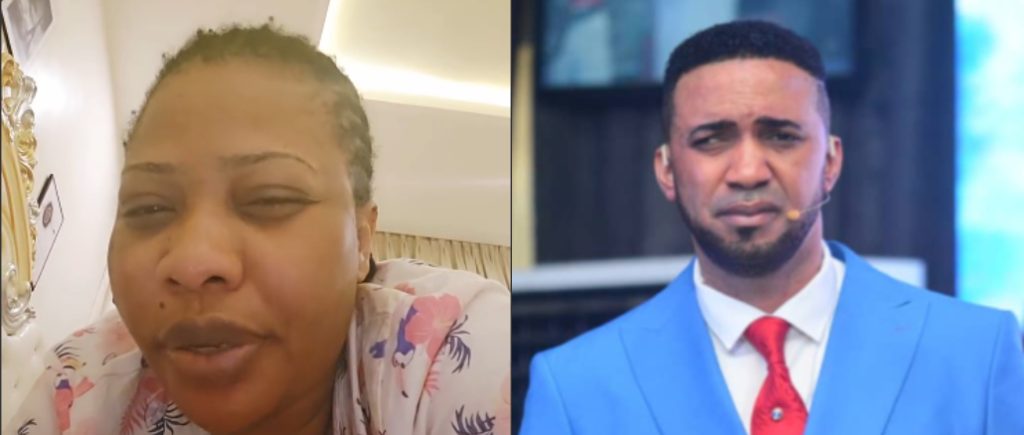

Founder of the Mountain of Liberation and Miracle Ministry, Dr Chris Okafor, has spoken publicly about how an alleged betrayal by an event planner turned his intended private remarriage into a widely debated public issue.
Addressing journalists at a press conference in Lagos on Thursday, the popular televangelist said the incident marked a major escalation in the online criticism he has endured, after personal information about his life surfaced on blogs and social media without his approval.
Okafor explained that conversations surrounding his remarriage were meant to remain confidential and were shared only with a few trusted individuals involved in the planning process. He claimed that an event planner violated that trust by releasing details of the proposed ceremony, which then rapidly spread online.
“What was meant to be a personal and quiet decision suddenly became a subject of public spectacle,” he said.
The cleric noted that the leaked information provided bloggers and social media commentators with fresh content, many of whom, according to him, mixed speculation and incomplete information and presented them as established facts.
He further stated that once the story gained traction online, it was quickly connected to earlier allegations levelled against him, creating a misleading narrative that he said spiralled beyond his control.
In November 2025, Nollywood actress Doris Ogala accused Okafor of having a long-standing romantic relationship with her and failing to honour a promise of marriage. She also made grave claims linking him to the death of her brother and alleged ritual activities at his church in Ojodu, Lagos State.
Okafor said the resurfacing of his wedding plans revived those accusations, with bloggers and online commentators revisiting them without proper verification.
Expressing his displeasure, the pastor criticised influencers who amplified the claims without seeking his response or demanding credible evidence.
“It is deeply hurtful when private information is leaked and people rush to conclusions instead of asking questions,” he stated, accusing some bloggers of valuing online traffic over factual accuracy.
According to him, the incident highlights a broader issue within Nigeria’s digital space, where privacy violations often carry no consequences. He urged the National Assembly to enact tougher regulations to curb irresponsible online behaviour and safeguard individuals from reputational harm.
He also called on cybercrime agencies to strengthen their efforts in tracking the sources of information leaks and ensuring that those responsible are brought to justice.
“This is not just about bloggers. People entrusted with private information must understand the weight of that responsibility,” he said.