

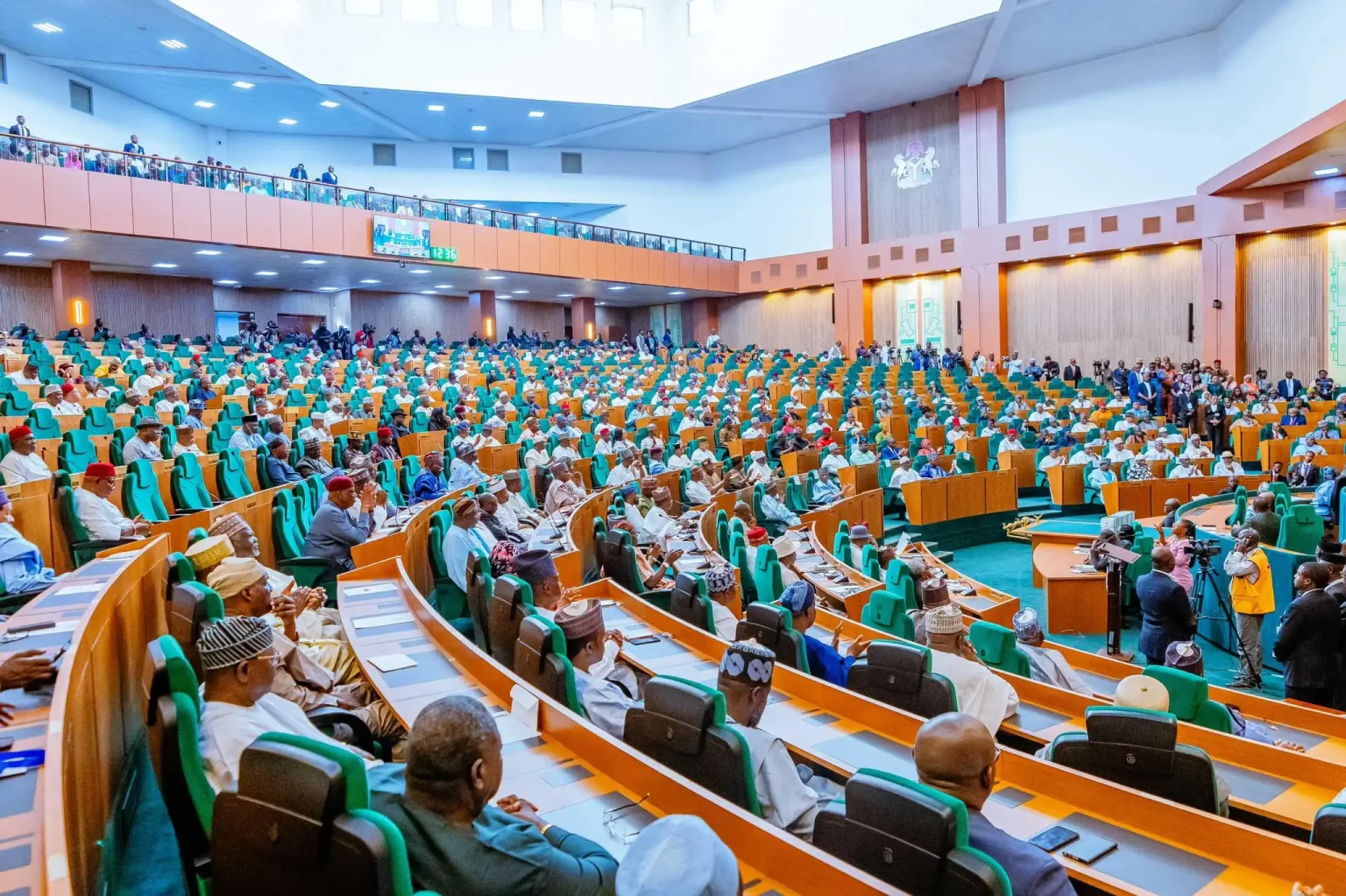

Nigeria’s House of Representatives has resolved to investigate the persistent decline in farm produce prices across the country, raising concerns about its impact on farmers’ livelihoods, food security and national nutrition.
The House of Representatives of Nigeria on Wednesday, April 22, called on the Federal Ministry of Agriculture and Food Security to collaborate with relevant agencies to urgently design and implement remedial measures. Lawmakers proposed structured off-taking arrangements and price support mechanisms to cushion the effects of falling agricultural prices.
The House also urged efforts to strengthen storage, processing and market access infrastructure, including the expansion of strategic grain reserves and agro-processing zones, in a bid to reduce post-harvest losses and stabilise prices.
The resolution followed the adoption of a motion of urgent public importance sponsored by Bamidele Salam, who highlighted agriculture as a critical pillar of Nigeria’s economy, supporting employment, rural livelihoods and contributing significantly to gross domestic product and food security.
Presenting the motion, Salam said there has been a sustained and sharp drop in the prices of staple and perishable crops such as cassava, rice and yam. He warned that the trend has led to “monumental financial losses” for farmers who invested heavily in inputs including seeds, fertilisers, agrochemicals, transportation and labour, often financed through loans and cooperative schemes.
He added that the absence of structured off-taking systems, inadequate storage facilities, weak agro-processing capacity and poor market linkages have worsened post-harvest losses and increased farmers’ exposure to market volatility.
Salam cautioned that if the situation remains unresolved, it could force farmers out of business, reduce agricultural investment and productivity, and deepen rural disengagement from farming. This, he said, could ultimately threaten national food security through shortages, rising prices and increased dependence on imports.
He further noted that disruptions in agricultural production and supply chains could limit access to affordable and nutritious food, worsening malnutrition and food insecurity, particularly among vulnerable populations.
Lawmakers emphasised the importance of government intervention through price stabilisation mechanisms, buffer stock programmes and structured commodity off-taking systems to protect farmers and ensure sustainable agricultural development.