

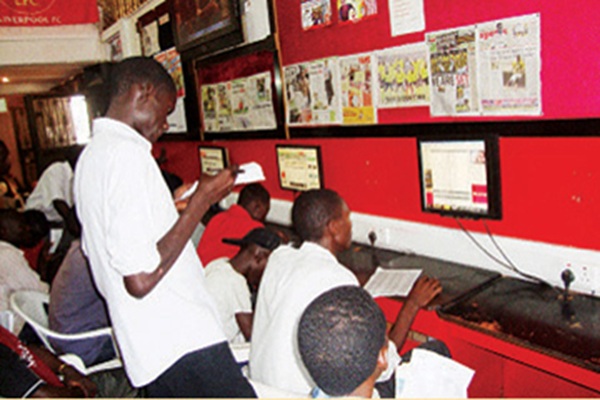

Nigeria’s gambling market is booming, reaching an estimated ₦5.6 trillion. The main growth driver has been the online segment, fuelled by the widespread adoption of smartphones, digital payment services, and mobile apps. A special role is played by young audiences, for whom betting and online casinos have become both a form of entertainment and a way to try to earn money amid a challenging economic situation.
- How Nigeria’s market compares with global leaders
- Comparison of Nigeria with other African countries in the gambling sector
- What is driving Nigeria’s market into the trillions
- The U.S. market: casino records and an iGaming surge
- The UK: maturity and a culture of cautious betting
- South Africa: an unexpected heavyweight
- Structured growth under provincial oversight—echoing the Kenyan model
- Economics vs. entertainment
- Three-quarters of sports bets in Nigeria are on football
- Where Nigeria still has gaps
- What Nigeria can learn from mature markets
How Nigeria’s market compares with global leaders
The scale of Nigerian gambling is increasingly being ranked alongside the world’s largest markets. Analysts compare Nigeria with the U.S., the UK, South Africa, and Canada across several parameters: market size and dynamics, popular betting formats, technological growth factors, and regulatory maturity.
Such a comparison makes it possible to see not only the impressive potential of Nigeria’s market, but also its vulnerabilities, primarily in regulation and the transparency of financial flows.
Comparison of Nigeria with other African countries in the gambling sector
Nigeria rightly ranks first in Africa by the scale of its gambling market, followed by South Africa in second place and Kenya in third. At the same time, many note Rwanda’s potential, which for now still lags far behind the leaders across all metrics. However, regulatory changes have led to the online casino segment and betting in Rwanda receiving a boost. The country is now seen as a small, tightly regulated market, which also has its advantages.
Kenya is considered the leader in mobile betting in Africa, while South Africa is the most developed and regulated market. Nigeria has for some time maintained its lead in mass participation, which is what drives high profitability figures.
What is driving Nigeria’s market into the trillions
The ₦5.6 trillion market estimate primarily reflects the dominance of the online format. Mobile access has become the key channel: a significant share of bets is placed via smartphones rather than in brick-and-mortar betting shops.
Young Nigerians, who make up the core audience, are actively adopting betting apps and digital payments. It is this demographic group that drives the main demand, and the broad penetration of mobile internet only accelerates the process.
The U.S. market: casino records and an iGaming surge
Data from the American Gaming Association for January 2026 paint an impressive picture:
- Total GGR (gross gaming revenue) amounted to $6.74 billion, up 3.4% from a year earlier
- Traditional casinos generated $4.03 billion (+0.9%), setting an all-time record
- The iGaming segment reached $1 billion, showing explosive growth of +21%
- Sports betting showed a slight decline of 0.1%, to $1.61 billion
Accessibility and a variety of formats are pushing American players, especially younger ones, online. Slots, poker, and sports betting form the core of preferences. The outlook is positive: the expected compound annual growth rate (CAGR) of the online segment is estimated at 9.8% for 2025–2030, and online casinos may grow even faster, up to 10.5% per year.
The UK: maturity and a culture of cautious betting
The British market is the complete opposite of Nigeria’s “breakneck” one. Strict regulation and high competition among operators make growth more moderate, noticeably lagging behind U.S. and Nigerian rates. At the same time, sports betting remains the undisputed leader, as in Nigeria.
British players’ preferences form a characteristic set: slots, blackjack, roulette, live-dealer games, poker, and bingo; interest in esports betting is growing. Notably, players tend to prefer low stakes and minimal risk, favouring extended play sessions with frequent small wins. Nigerian players show similar patterns, although classic, animal-themed, and Asian-themed slots are especially in demand among them.
South Africa: an unexpected heavyweight
South Africa’s online market is growing at a pace that surprises even seasoned analysts:
- The revenue forecast for 2030 is 2,663.1 million
- The CAGR for 2025–2030 is estimated at 10.8%, which exceeds the U.S. figure
- Total market turnover in recent financial years exceeded ZAR 1 trillion
Sports betting is the largest and fastest-growing segment. Slots hold the position of the most popular gaming vertical, and players are increasingly interested in more immersive formats: live-dealer games and esports. Mobile betting and smartphone penetration remain the main technological drivers of growth.
Structured growth under provincial oversight—echoing the Kenyan model
Canada’s market stands out for its maturity and orderliness. Provincial oversight sets the rules in each region, and certain territories, such as Ontario, have opened licensing to private operators, which has stimulated competition and innovation.
Unlike Nigeria, where growth has been largely organic and unstructured, Canada’s momentum is built on consumer protection and responsible gambling practices. Canadian users show a balanced interest in sports betting and online casinos, including slots, table games, and live dealer. A characteristic feature of the audience is close attention to bonus terms and return to player (RTP) metrics, which indicates a high level of awareness.
Economics vs. entertainment
Player motivation differs noticeably by country. In Nigeria and South Africa, economic reasons come to the fore: betting is seen as a potential source of income. In the U.S. and the UK, the entertainment component dominates.
This difference in motivation directly shapes product choice. Where betting is viewed as “earning,” sports betting, low amounts, and formats with frequent wins that let players extend their sessions and feel a streak of victories are more popular.
Three-quarters of sports bets in Nigeria are on football
One figure says more about Nigeria’s market than any analytical reports: almost 75% of all sports bets are on football. A cultural obsession with the sport, combined with the accessibility of mobile betting, creates a funnel effect, channeling a colossal flow of money into a single segment.
Where Nigeria still has gaps
The UK and the U.S. show what an effective regulatory environment can look like. The UK Gambling Commission regularly publishes market statistics, applies uniform standards to all operators, and oversees their enforcement. The U.S. state-by-state, multi-layered system covers licensing, taxation, and reporting at the level of each state, ensuring a transparent path for revenues into the budget.
In Nigeria, the picture is different: oversight is uneven across regions, enforcement has significant gaps, and the flow of money from players into the public treasury remains opaque.
What Nigeria can learn from mature markets
Other countries’ experience suggests several specific directions:
- Strengthening and coordinating regulation at the federal level
- Introducing transparent reporting and systematic revenue collection
- Expanding consumer protection mechanisms
- Bringing order to the online-operator market with clear licensing requirements
In the UK, regular monitoring and public reporting make it possible to track the industry’s health in real time. The U.S. state model ensures formal revenue capture, making every dollar of gambling turnover visible to tax authorities. Given the scale of participation that Nigeria’s market demonstrates, the absence of such mechanisms means the loss of significant budget revenues and increased risks for players.
Nigeria’s gambling market is expanding rapidly thanks to mobile online gambling and a large youth audience, but the key risk remains uncoordinated regulation and non-transparent revenue collection. The next critical step for the country will be to tighten and harmonise rules, reporting, and player-protection mechanisms.