

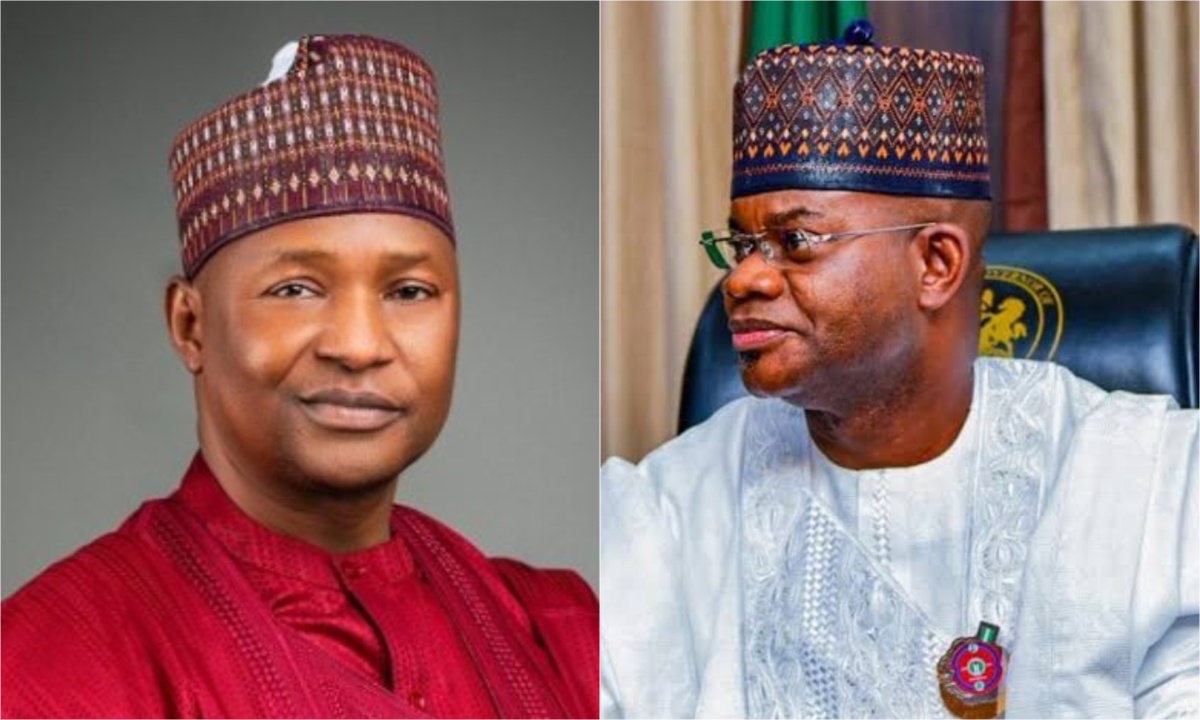

A politician standing trial for corruption can contest an election, be sworn in as governor, and have the criminal case against him suspended until he leaves office, a legal practitioner, Barrister Zurkallaini Sani Tsanyawa, has said.
The lawyer was reacting to the controversy surrounding the emergence of former Attorney-General of the Federation, Abubakar Malami (SAN), as the African Democratic Congress (ADC) governorship candidate in Kebbi State despite his ongoing trial by the Economic and Financial Crimes Commission (EFCC).
Malami is facing a 16-count charge bordering on alleged money laundering before the Federal High Court in Abuja alongside his wife and son. The trio have all pleaded not guilty.
The Kebbi State chapter of the ADC has described the prosecution as politically motivated, insisting that the case will not affect Malami’s chances in the 2027 governorship election.
In a statement signed by the party’s State Chairman, Engr. Sufiyanu Bala, and Chairman of the ADC Elders Forum, Alhaji Shehu Aliyu Sambawa, the party alleged that the prosecution was aimed at weakening the opposition ahead of the elections.
Malami is not the only politician seeking elective office while defending corruption allegations in court.
Former Kogi State Governor, Yahaya Bello, is also facing separate EFCC trials over alleged ₦110.4 billion fraud and ₦80.2 billion money laundering. Despite the ongoing cases, he has secured the APC ticket to contest the Kogi Central Senatorial seat in the 2027 elections.
The two cases have renewed public debate over whether politicians facing criminal prosecution should be allowed to seek elective office.
Speaking in an exclusive interview with DAILY POST, legal practitioner Tsanyawa said a criminal trial cannot continue against a serving governor because of the immunity granted under Section 308 of the 1999 Constitution.
“Once he is sworn in as President, vice president, governor, or deputy governor, the trial is not terminated; it is merely put on hold until he leaves office,” Tsanyawa said.
According to him, the immunity only applies to the office holder, while the trial of any co-defendants can continue.
On the subject of the eligibility of the candidates themselves, Tsanyawa said the Constitution leaves little room for ambiguity.
“A candidate standing trial but not yet convicted is constitutionally qualified to contest and occupy the office of President, Vice President, Governor, or Deputy Governor,” he said.
He explained that Sections 131 and 177 of the Constitution, which set out the qualifications for the offices of President and Governor, do not list a pending criminal case as a ground for disqualification.
The only criminal-related disqualification, he said, is a conviction for an offence involving dishonesty or fraud within the period prescribed by the Constitution.
He also cited Section 36(5), which guarantees the presumption of innocence. “Because the candidate has not been convicted, he is presumed innocent. INEC and the courts cannot disqualify him solely on the basis of an ongoing trial,” he added.
While agreeing that the Constitution protects the rights of accused persons, Professor Murtala Muhammad, Vice President of the Nigerian Political Science Association (NPSA), in an exclusive interview with DAILY POST, said the increasing number of politicians contesting elections while facing corruption charges exposes weaknesses in both the electoral and judicial systems.
According to him, Nigeria’s constitutional democracy must balance the presumption of innocence with the need to protect the integrity of public office.
He noted that many politically exposed persons take advantage of the slow pace of criminal trials to seek fresh mandates before their cases are concluded.
“Cases involving former governors, ministers, and legislators have remained in court for years, allowing some defendants to secure new political mandates before the law reaches its logical conclusion,” he said, adding that the trend weakens public confidence in both the judiciary and the electoral process.
Muhammad also warned that many Nigerians now see public office as a shield against prosecution.
According to him, election victories often give politically exposed persons greater influence, which can delay investigations, discourage witnesses, and prolong trials through endless interlocutory appeals.
“The result is a vicious cycle where public office is increasingly viewed not only as a platform for service but also as a strategic refuge from legal accountability,” he said.
He, however, argued that the answer is not to deny anyone their constitutional rights.
Instead, he called for reforms to ensure corruption cases involving politically exposed persons are concluded within a reasonable time before elections.
Among his recommendations are “constitutional and electoral reforms to fast-track such cases, the establishment of special anti-corruption courts with strict timelines, and measures to discourage unnecessary adjournments in high-profile corruption trials.”
Murtala further revealed that countries such as Brazil and Italy have shown that timely prosecution of politically exposed persons can strengthen public trust in democratic institutions without undermining the right to a fair hearing.