

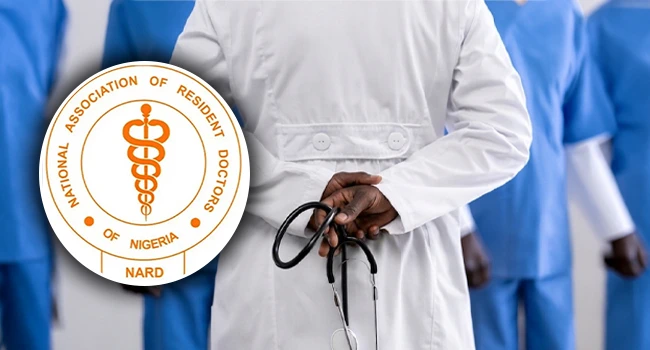

The National Association of Resident Doctors has given the Federal Government two weeks to resolve outstanding welfare and professional issues affecting its members, warning that failure to act could lead to industrial action. The ultimatum was contained in resolutions reached at NARD’s 46th Annual General Meeting in Calabar and presented by the association’s National President, Dr Emmanuel Ogar.
The resident doctors expressed concern over what they described as the slow implementation of agreements previously reached with the Federal Government, saying the prolonged delays had become unacceptable. NARD demanded urgent action on remuneration, career progression, professional allowances, excessive workload, manpower shortages and the general welfare of resident doctors. The association called for the immediate implementation of agreements reached with the government, particularly those relating to improved conditions of service and professional development.
It also urged the government to conclude the review of existing remuneration and professional salary structures for doctors, arguing that the current framework no longer adequately reflects prevailing economic conditions. NARD demanded appropriate compensation for doctors handling additional responsibilities because of manpower shortages in hospitals.
The association called for standardised templates for calculating compensation for excess workload, as well as reliable data to support payments to doctors performing duties beyond their normal responsibilities. It also raised concerns about attacks on healthcare workers and called for the full implementation of policies and anti-assault measures designed to protect doctors and other medical personnel in health facilities.
NARD said the continued migration of doctors and other healthcare professionals from Nigeria had worsened existing manpower shortages and increased pressure on those remaining in the country. The association urged the Federal Ministry of Health and Social Welfare to urgently address factors contributing to the migration of medical professionals. Africans& Diaspora
State governments were also urged to prioritise the welfare of doctors and other healthcare workers employed by their institutions and ensure the implementation of relevant welfare policies. NARD called for improved infrastructure, adequate medical equipment and better working conditions in healthcare institutions, saying these measures were necessary to improve patient safety and healthcare delivery.
The association also urged the National Assembly to strengthen budgetary provisions for healthcare, stressing that adequate funding remained critical to addressing challenges facing the sector. It demanded the prompt payment of salaries and other entitlements owed to house officers and called for their inclusion in relevant welfare arrangements.
On the use of electronic clocking systems in hospitals, NARD said it was not opposed to the technology provided it was properly implemented and used to support accurate data management rather than as a punitive measure against medical personnel. The association said several agreements and commitments made by the Federal Government remained unresolved despite repeated meetings and assurances.
It therefore urged the government to use the two-week window to address the outstanding issues and prevent a breakdown of industrial harmony in the health sector. NARD said resolving the disputes would improve doctors’ welfare, reduce burnout and ultimately enhance the quality of healthcare available to Nigerians.
The association also elected new national officers at the meeting, with Dr Emmanuel Ogar emerging as president alongside other members of the National Executive Council. NARD urged the new leadership to pursue the implementation of its resolutions and maintain engagement with the government towards securing improved conditions of service for resident doctors.