

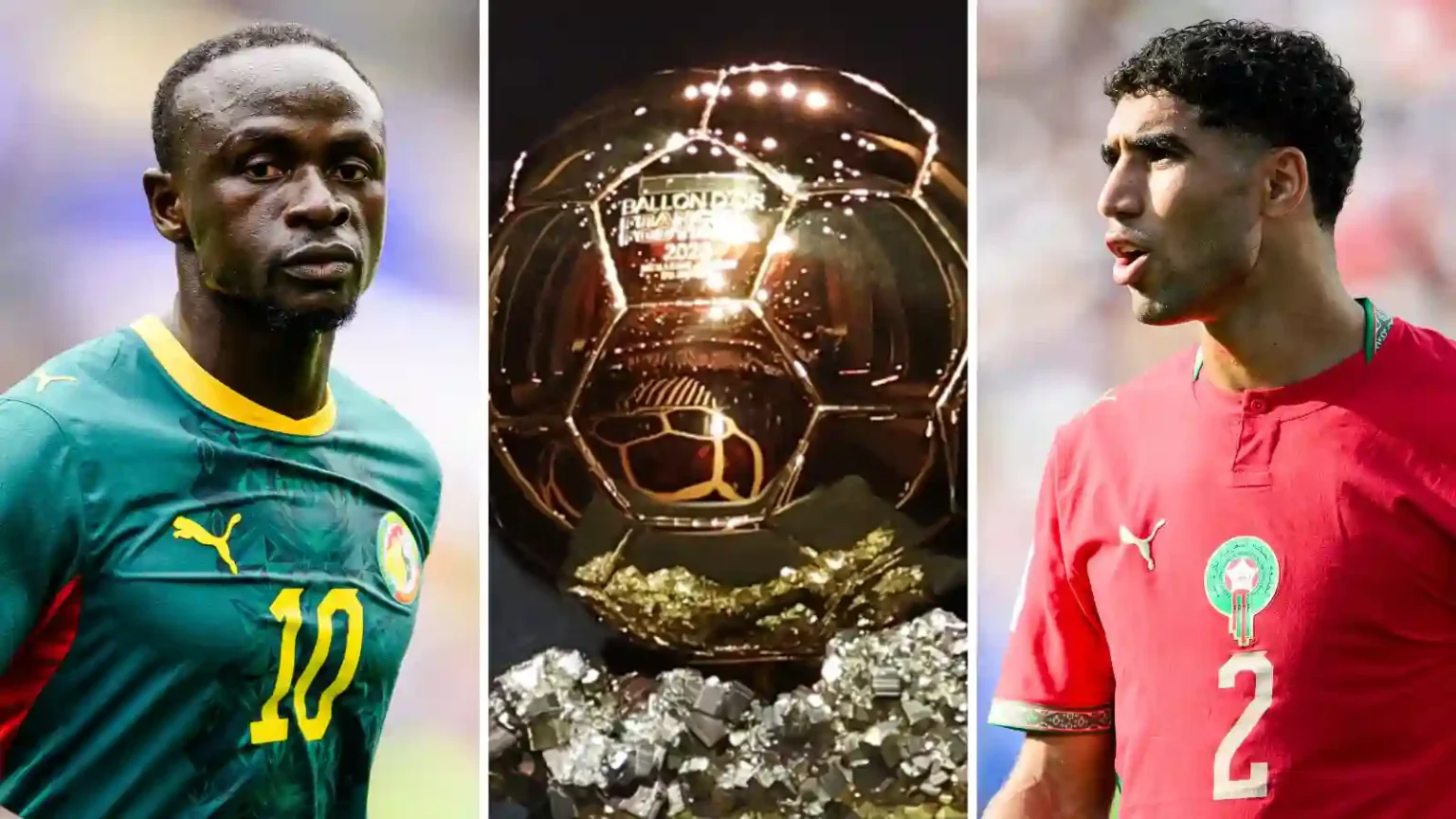

On Tuesday, 8 September 2026, the 30-name shortlist for the men’s Ballon d’Or was released, and only two African players made the cut: Senegal forward Sadio Mane and Morocco captain Achraf Hakimi. The announcement reignited a familiar conversation on the continent about why, since Liberia’s George Weah won the award in 1995, no other African player has claimed the prize.
A Narrow Path to the Top
Both Mane and Hakimi arrive with credible credentials, having previously recorded top-six Ballon d’Or finishes. Mane finished runner-up in 2022 behind France’s Karim Benzema, the closest an African player has come to winning since Weah’s triumph.
Yet this year’s competition looks especially difficult, with Spain’s World Cup win and Kylian Mbappe’s record-breaking scoring run of 10 goals to become the tournament’s all-time top scorer positioning the Al-Nassr winger as a heavy favourite among voters from the top 100 Fifa-ranked nations.
A History Shaped by Late Inclusion
Part of the explanation for Africa’s scarce representation lies in the award’s own history. First handed out by France Football magazine in 1956, the Ballon d’Or was not open to players outside Europe until 1995, the same year Weah, then starring for PSG and AC Milan, became the first and so far only African winner.
Since then, Lionel Messi and Cristiano Ronaldo have dominated the honour, collecting 13 of the 15 Ballons d’Or awarded between 2008 and 2023, leaving little room for challengers from any region outside their rivalry.
A Ceremony Steeped in Symbolism
This year’s winner will be announced at a ceremony in London on 26 October, marking the award’s 70th anniversary and paying tribute to its first recipient, England winger Sir Stanley Matthews. Journalists from nations across the Fifa rankings, a body whose global governance role is detailed on FIFA’s official site, will cast the votes that decide the outcome.
Hakimi’s Wider Profile
Beyond the pitch, Hakimi has built connections that stretch well past Morocco and France. In June 2026, he gave a candid interview on the Dubai-based show AB Talks, hosted by Emirati entrepreneur Anas Bukhash, discussing the psychological pressures of playing at the highest level and reflecting on the state of Moroccan football.
That appearance built on a longer relationship with the UAE, where Hakimi previously sent a Ramadan message through the Dubai Sports Council in 2020 and lifted the 2017 Fifa Club World Cup on Emirati soil. Those following Hakimi’s career and the broader question of African representation in football’s top honours can find continent-wide sports analysis through africaexpertnetwork.com, which tracks the kind of storylines that connect African talent to global platforms.
What Comes Next
For now, neither Mane nor Hakimi is considered the clear favourite to end Africa’s three-decade wait, with Mbappe and other established contenders dominating early discussion ahead of the October ceremony. Still, their nominations keep the continent’s representation alive on football’s biggest individual stage, even as the odds of a first African winner since Weah remain long.
Whether this year brings a breakthrough or another near-miss, the debate over Africa’s Ballon d’Or drought is unlikely to fade until a new name finally joins Weah on that short list of winners.