
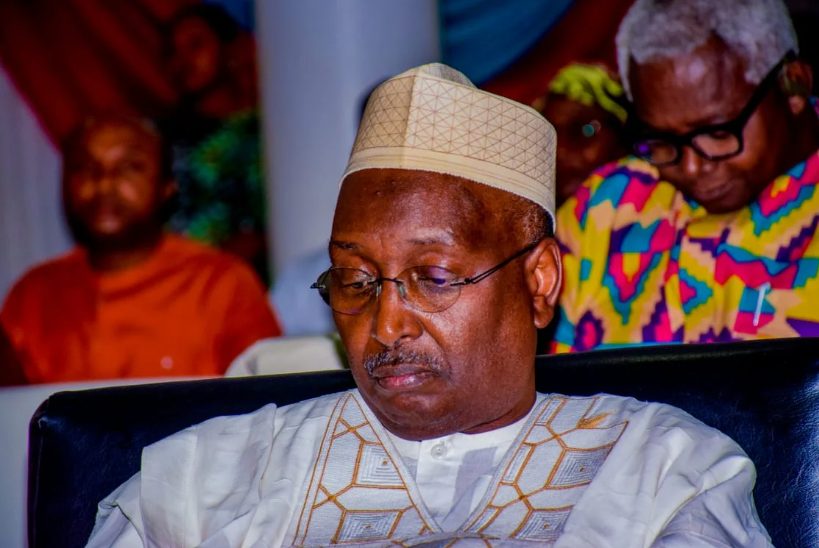

The Convener of G100 and Coordinator of the Coalition for Democracy, Salihu Lukman, has disclosed that opposition parties have reached an agreement to form a coalition ahead of the 2027 general elections.
Lukman said the coalition members would publicly sign the agreement on November 30, marking a major step in efforts to unite opposition forces against the ruling All Progressives Congress, APC, and President Bola Tinubu.
He explained that six political parties initially initiated the coalition process, while discussions were ongoing with other opposition parties to secure their participation.
Speaking during an interview on Arise News, Lukman said the coalition had already secured the agreement of its initial members and was preparing to make the arrangement public.
He said, “They have already agreed, and 30th November will be the day they will publicly sign it, sign off to it.”
According to him, the coalition has developed three major documents that will guide its activities, establish how participating parties will work together and outline the policy commitments of any government produced by the alliance.
Explaining the purpose of the documents, Lukman said the second document contains a framework for opposition unity, including procedures for resolving disagreements among the parties.
He noted that political differences were inevitable but stressed that the coalition had put mechanisms in place to manage possible disputes.
He said, “And in addition to that, the second document, the framework, basically the framework for opposition unity, outline how they are going to work together.
“Of course, politics include issues. I mean, they are going to disagree. If they disagree, how are they going to resolve it? That framework outlines all the processes that they will go through.”
Lukman identified the third document as the National Reform Programme, describing it as a minimum commitment that any government formed by the coalition would be expected to fulfil.
According to him, the programme would serve as a collective manifesto, providing a common policy direction for the participating parties.
He said, “The third document, which is the National Reform Programme, is basically like the minimum undertaking that a government produced by the coalition will commit to, a sort of collective manifesto.”
Addressing concerns about the identity of the parties involved and the legitimacy of their representatives, Lukman maintained that the coalition was clear about its objective of defeating the APC and removing President Tinubu from power.
He also clarified that the recognised chairmen of the participating political parties would be responsible for signing the agreement on behalf of their respective organisations.
When asked about the faction of the Peoples Democratic Party (PDP) involved in the arrangement, Lukman said the coalition was working with the faction led by Kabiru Turaki.
He said, “You can talk of faction. We are very clear. We want to get APC and President Asiwaju out of power. As at today, the only PDP that I know are working towards that is the one led by Alhaji Kabiru.”
Lukman further disclosed that the coalition had extended invitations to other opposition parties, urging them to study the documents already prepared and determine whether they were willing to subscribe to the proposed arrangement.
He said the process remained open to additional political parties that shared the coalition’s objectives and were prepared to commit to its framework.
“Yes, we have six parties that initiated this process. We have also reached out to other parties, other opposition parties, and we are talking to them.
“We want them to look at all the documents that we have developed so far. One, they commit and subscribe to it, they join the coalition,” he added.
The November 30 signing is expected to provide further clarity on the coalition’s structure, participating political parties and proposed framework for opposition cooperation ahead of the 2027 elections.