

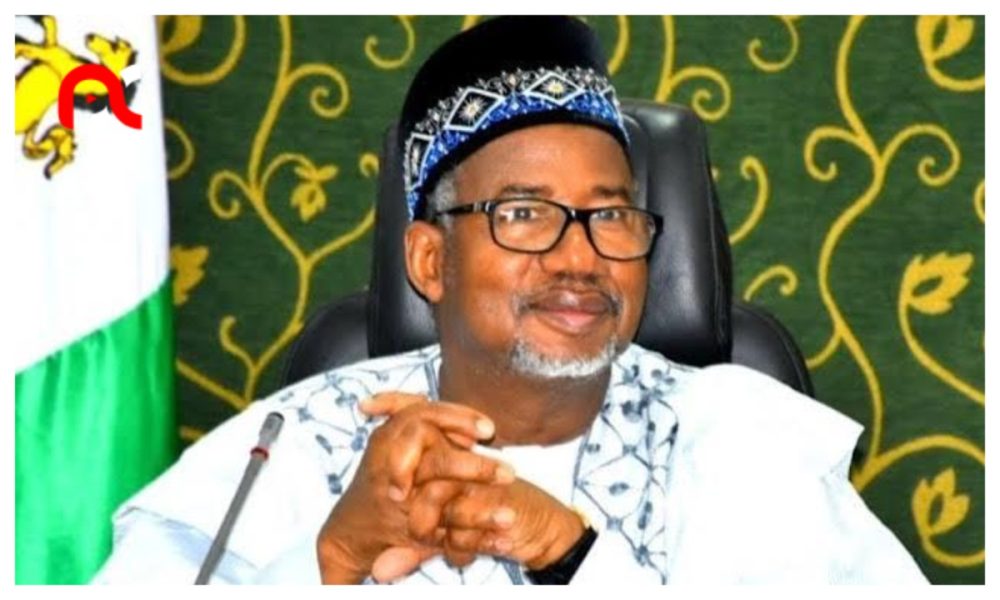

Bauchi State Governor, Bala Mohammed, is heading into the 2027 general election with two major political ambitions: to install his preferred successor, Dr Yakubu Adamu, as governor and return to the Senate to represent Bauchi South Senatorial District.
Both ambitions are unfolding at a time when the governor faces stiff political challenges from opposition parties, including the All Progressives Congress, APC, Peoples Redemption Party, PRP, and African Democratic Congress, ADC, which are positioning themselves for the governorship and senatorial contests.
Mohammed’s decision to join the Allied Peoples Movement, APM, after months of speculation that he could defect to the ADC or remain in the Peoples Democratic Party, PDP, has altered the political equation in the state.
The move is seen as an attempt to secure a platform for his political future while giving his preferred successor an opportunity to take over from him. However, whether the governor can achieve both objectives remains a major question ahead of the election.
Bauchi’s political history offers little encouragement to governors seeking to install their successors. Since the return to democracy in 1999, no sitting governor in the state has successfully handed over power to a candidate of his choice.
Former Governor Adamu Mu’azu, who governed between 1999 and 2007, could not keep power within his political camp, as Isa Yuguda succeeded him. Yuguda, who governed from 2007 to 2015, also failed to install his preferred successor, Mohammed Abubakar, who lost the 2019 governorship election to Bala Mohammed.
The struggle to retain political influence after leaving office has also proved difficult for former governors seeking election to the Senate.
In 2007, Mu’azu lost the Bauchi South senatorial seat to Bala Mohammed, who was then a Special Adviser to the Minister of Aviation, Isa Yuguda. Similarly, Yuguda lost his bid to represent the district in the Senate in 2015 to Ali Wakili of the APC.
These experiences raise questions about Mohammed’s chances of returning to the Senate after completing his tenure as governor.
An analyst and lecturer at Abubakar Tafawa Balewa University, Comrade Abdullahi Yelwa, said the governor would face an uphill task in trying to install his successor and return to the Senate.
He said the state’s political history showed that governors often struggled to retain power through their preferred candidates.
“It is very difficult for a serving governor to bring his successor. From 1999 to date, that has not happened. And no former governor has also become a senator after leaving office.
“Look at what happened to Adamu Mu’azu. He did excellently well in terms of projects, acceptability and connections. Yet Kauran Bauchi defeated him when he was just a Special Adviser to the Minister of Aviation, Isa Yuguda,” Yelwa said.
The challenge before Yakubu Adamu
For the APM, the biggest question is whether Yakubu Adamu can win the governorship election with Mohammed’s support or build enough personal political capital to compete with opposition candidates.
Although the governor has spent years building his political network, Adamu will have to convince voters that he can lead the state independently rather than depend entirely on Mohammed’s influence.
Yelwa believes the APM is heavily dependent on the governor and could struggle if its candidate fails to attract support beyond Mohammed’s political followers.
“The APM is hanging on the neck of the serving governor. Yakubu does not have his own political empire. He is relying on his godfather.
“If Yakubu has his own votes and Bala’s supporters also support him, then they can make a difference. But if you ask me whether Yakubu has his own votes, I will say no,” he said.
The analyst also warned that Mohammed’s achievements in office might not be enough to guarantee victory for his preferred candidate.
He said that although the governor had embarked on several projects across the state, some residents remained dissatisfied over the rising cost of living, compensation for houses affected by road construction and the government’s failure to award contracts to some people who had expected them.
Yelwa said these issues could affect the APM’s chances if opposition parties capitalised on them to challenge the administration.
“Bala has done well in terms of projects, but you cannot also ignore the fact that inflation has affected the people. Some people are also angry over compensation for houses affected by road projects, while others expected contracts and were disappointed,” he said.
The Senate race
While the governorship contest will determine whether Mohammed can install his preferred successor, his Senate ambition will depend largely on his ability to secure support across Bauchi South.
The district comprises seven local government areas: Alkaleri, Bauchi, Bogoro, Dass, Kirfi, Tafawa Balewa and Toro.
Mohammed’s position as governor may give him an advantage in the state, but the Senate election will be determined by voters in these seven local government areas. His popularity across Bauchi State may not necessarily translate into enough votes to defeat his opponents in the district.
The results of previous elections also show that the APC has maintained a strong presence in the senatorial district.
In the 2019 election, the APC polled 250,725 votes against the PDP’s 175,527. In 2023, the APC retained the seat through Senator Shehu Buba Umar, who defeated the PDP candidate, Dahiru Garba.
Buba is now contesting for the governorship on the platform of the PRP after defecting from the APC.
His defection came days after he withdrew from the APC governorship primary election in the state, citing alleged irregularities and violations of electoral laws and party guidelines.
Buba announced his resignation from the ruling party yesterday, saying his decision was informed by what he described as the absence of internal democracy, lack of fairness, marginalisation of genuine party members and disregard for the aspirations of grassroots supporters.
Aside from Buba, other prominent figures who have also left the party include former Bauchi State Deputy Governor, Alhaji Sagir Aminu Saleh; former two-time APC governorship aspirant, Captain Muhammad Bala Jibrin; and Hon. Sunusi Aliyu Kunde, a close associate of former Minister of Foreign Affairs, Ambassador Yusuf Maitama Tuggar, among others.
The wave of resignations is coming despite reconciliation efforts by the APC, including those of the state reconciliation committee led by former Speaker of the House of Representatives, Rt. Hon. Yakubu Dogara.
Political observers believe Buba would have been a stronger candidate for the APC if the party had allowed him to contest under its platform.
Yelwa argued that the senator already had a political structure and supporters of his own, which could have strengthened the APC’s chances when combined with votes expected from supporters of President Bola Tinubu.
“Buba would have been stronger for APC. He has his own structure and votes. If you combine that with Tinubu’s votes, the calculation would have been different,” he said.
APC’s Mohammed Abubakar and Tinubu’s influence
Meanwhile, controversy has trailed former Governor Mohammed Abubakar’s emergence as the APC’s governorship candidate for the 2027 election.
Abubakar, who governed Bauchi between 2015 and 2019, will be seeking a return to the Government House after losing his re-election bid to Mohammed.
His experience as a former governor and the backing of the ruling party at the federal level could strengthen his campaign. However, questions remain about his popularity among voters and whether the APC can win the state by relying on President Tinubu’s influence.
Yelwa said the former governor had some advantages but was not as popular in Bauchi as the President.
“M.A. has prospects because he has the backing of the national government, but he is not very popular in Bauchi. Tinubu is more popular than M.A. in Bauchi.
“If Tinubu wants to win Bauchi, he should have picked somebody who has his own acceptability and votes instead of relying on Tinubu’s votes,” he said.
He warned the APC against assuming that Tinubu’s position as President would automatically guarantee victory for its candidates in the state.
“Tinubu is a strong politician. He is a bulldozer. But he should not assume that, because he is president, everything will automatically go for him in Bauchi,” Yelwa added.
The APC will therefore have to convince voters that Abubakar can attract support beyond the President’s popularity, especially in a state where Mohammed still has a strong political presence.
ADC and the Atiku factor
The ADC is also expected to play a major role in the 2027 election, with Aliyu Halliru Jika emerging as its governorship candidate.
The party could benefit from the influence of former Vice-President Atiku Abubakar, particularly in the North-East, where he has maintained a strong political following.
The ADC may also attract voters dissatisfied with the current economic situation and those seeking an alternative to the APC and APM.
Yelwa said the party could benefit from protest votes if Atiku’s supporters mobilised behind its candidates.
“It can be a four-horse race. The ADC can get protest votes because of Atiku. In Bauchi, sometimes people follow the wind of change at the national level.
“Atiku may not defeat Tinubu nationally, but ADC can win some Senate seats and even governorship votes in the Northeast because of the Atiku factor,” he said.
He added that the economic difficulties facing Nigerians could make some voters consider the ADC if the party promised to address issues such as taxation, fuel prices and the cost of living.
“People are looking for a way out of this hardship. If Atiku comes and says he will reverse some of these things, reduce taxes and address the fuel problem, there will be people who will listen to him,” Yelwa said.
However, the ADC will also need to convince voters that it has the candidates and political structures to translate public dissatisfaction into electoral support.
Yelwa said the contest could be difficult to predict because the four major parties had different strengths and could share the votes.
“It is too early to say who will win. It can be a four-horse race, and the votes can be divided among the candidates,” he said.