

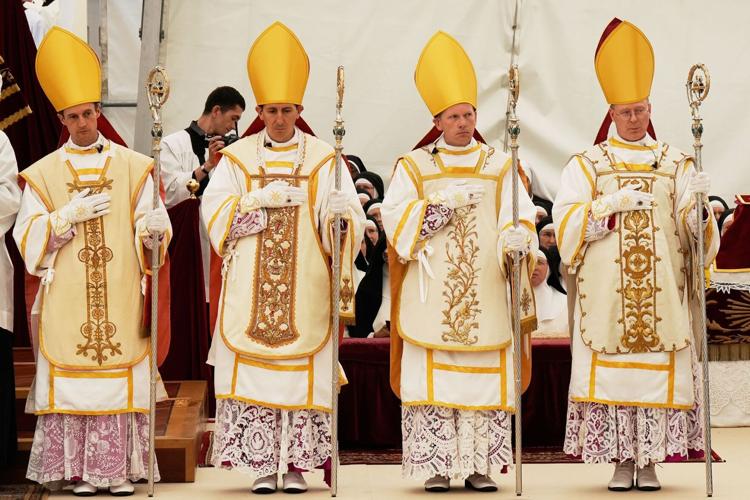

The Vatican announced Thursday, July 2, that priests and members of a breakaway Catholic group that ordained four new bishops in defiance of Pope Leo XIV’s wishes are in schism and excommunicated.
The Society of Saint Pius X, an ultra-traditionalist group, went ahead with the ordinations on Wednesday without papal approval and despite appeals from Leo to reverse the decision. In response, the Vatican’s doctrinal office published a decree stating that the four newly consecrated bishops are excommunicated, along with the two bishops who participated in the ordination ceremony.
Excommunication means they are excluded from the sacraments of the church. The office added in an explanatory note that priests belonging to the society and lay members who formally adhere to the group are also in schism and excommunicated.
The decree warns all clerics and the lay faithful not to formally follow the society as they will automatically incur the penalty of excommunication. In a final appeal to the group on Tuesday, Leo had warned that the ordinations would be a schismatic act and a sin of extreme gravity, and the ruling by the Vatican is wide-ranging in clamping down on the group.

Later Thursday, the doctrinal office set out the steps needed for priests to be allowed back into regular church life, including writing personally to the pope asking for the excommunication to be lifted, Vatican News reported. Priests must also sign a profession of faith and make a pledge not to publicly attack the pontiff and his teachings, among other conditions.Leo has not commented publicly since the ordinations were carried out.
Cardinal Pietro Parolin, the Vatican’s secretary of state, expressed deep sorrow about the ordinations, stating they break the unity of the Church and incur very specific sanctions, fundamentally excommunication.
The society, known as the SSPX, was founded in 1970 in Switzerland by Archbishop Marcel Lefebvre, a French prelate, but five years later was officially suppressed by the Bishop of Fribourg. In 1988 the group ordained four bishops without papal approval, which led to their excommunication at the time. The latest action from the Vatican goes further than the sanctions in 1988, which were limited to the bishops.
While Pope Francis had previously allowed the society to administer the sacraments of marriage and confession, the latest Vatican ruling states that any marriage or confession offered by the group will now be considered invalid.
The note does say, however, that the Church, as a caring mother, will welcome with sincere affection and active care all those who wish to return to full communion. At the heart of the splintering from the mainstream church was Lefebvre and his followers’ opposition to church reforms introduced in the 1960s by the Second Vatican Council.
The Lefebvrists do not accept what the council taught on religious freedom, on ecumenism, and reforms to Catholic worship, such as celebrating Mass in languages other than Latin. One of the major reforms at the council was a condemnation of all forms of antisemitism.
During his pontificate, Leo XIV has made church unity a priority, with a foundation stone of that unity being the link between the pope and bishop. On June 16, the pope pointed out to journalists that the Lefebvrists refuse to accept certain fundamental elements of the Church, beginning with several points of the Second Vatican Council.
On the planned ordinations, he stated that if that is the choice they make, he is sorry, but the church must move forward. The group has an active presence in the United States, with a headquarters in Missouri and a seminary for training priests in Dillwyn, Virginia. One of the bishops newly ordained on Wednesday is Father Michael Goldade, who leads that seminary. Goldade stated at a service after the ordinations that the modernist church is a desert that kills everything that it touches.