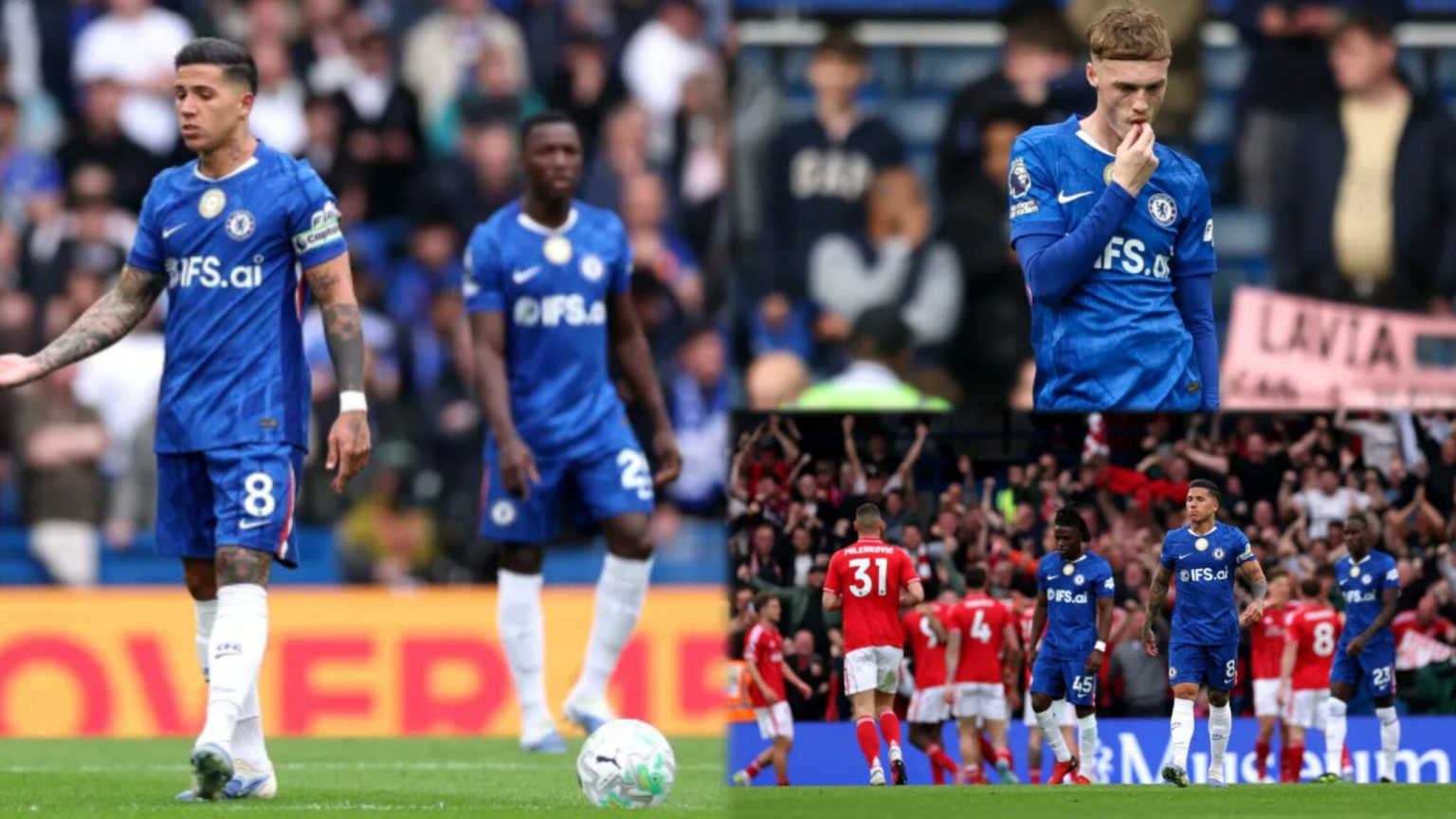
“Everyone needs to look at themselves, me included,” he said, shifting responsibility away from interim boss Calum McFarlane and onto player performance.
The absence of cohesion, urgency, and leadership on the pitch continues to undermine any tactical setup.
Palmer’s decline mirrors Chelsea’s drop
Cole Palmer’s drop in form is emblematic of Chelsea’s broader struggles. Once a standout performer, his output has significantly declined, with reduced goal contributions and diminished attacking influence.
In contrast, players like Jude Bellingham, Eberechi Eze, and Morgan Rogers are currently delivering stronger, more consistent performances, raising legitimate questions about Palmer’s place in Thomas Tuchel’s England side ahead of the World Cup.
Chelsea defensive structure keeps conceiving
Chelsea’s defense has become a liability. Regular concessions, often multiple goals per game, shows a systemic breakdown in the back line.
The contrast with the stability once provided by Thiago Silva is stark, underlining how far standards have dropped.
What happens next for Chelsea?
From a performance and governance perspective, Chelsea are in a high-risk position. Managerial instability, fan unrest, and unclear long-term planning continue to erode confidence.
With European qualification slipping out of reach, the club faces a scenario where even secondary continental competitions are no longer guaranteed.
Unless there is immediate operational and performance reset, Chelsea risk closing the season as the league’s worst-performing side.