

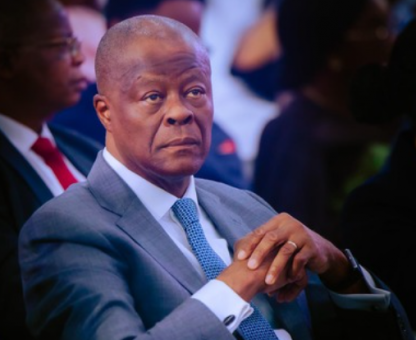

The Federal Government has said that its intensified counterterrorism efforts and international security cooperation will not harm Nigeria’s economy, but instead strengthen investor confidence and support sustained economic growth.
The Minister of Finance and Coordinating Minister of the Economy, Wale Edun, made this known in a statement issued amid concerns in some quarters over the joint security operation carried out by Nigeria and the United States against terrorist elements in Sokoto State last Thursday.
Edun said the security operation was carefully targeted and should be viewed within the broader context of national stability and economic protection.
According to him, the collaboration between Nigerian security forces and the United States was strictly aimed at neutralising terrorists who threaten lives, infrastructure and economic activity, stressing that it was not designed to create uncertainty in financial or investment circles.
“What Nigeria is decisively confronting, alongside trusted international partners, is terrorism,” Edun said. “This distinction is important, and it is fundamental to understanding the positive economic implications of recent actions.”
He explained that the Sokoto operation was intelligence-led and precisely executed, noting that far from destabilising markets, such actions reinforce peace and protect productive communities.
“Security and economic stability are inseparable; every effort to safeguard Nigerians is, by definition, pro-growth and pro-investment,” he added.
Edun highlighted what he described as tangible progress under the administration of President Bola Ahmed Tinubu, citing improvements in both security and economic reforms reflected in recent macroeconomic indicators.
He said Nigeria recorded a Gross Domestic Product (GDP) growth of 3.98 per cent in the third quarter of 2025, following a 4.23 per cent expansion in the second quarter, adding that a stronger performance was expected in the fourth quarter.
The finance minister also noted that inflation had eased for seven consecutive periods and had fallen below 15 per cent, attributing the trend to improved price stability and coordinated fiscal and monetary policies.
Nigeria’s financial markets, he said, remain stable, with both domestic and international debt platforms operating efficiently under prudent fiscal management. He added that recent credit rating upgrades by Moody’s, Fitch and Standard & Poor’s were independent validations of the government’s policy direction and reform outcomes.
“We have maintained fiscal discipline, prioritised efficiency, and protected macroeconomic stability, demonstrating resilience in the face of external shocks,” Edun said.
He reiterated the president’s recent national address, which outlined the government’s priority for 2026 as consolidating gains recorded in 2025, strengthening economic resilience and sustaining momentum toward inclusive growth.
“As markets reopen, investors can be confident that Nigeria remains focused, reform-driven, and committed to stability,” he said, adding that the country remains open for business and firmly focused on the future.
Edun also pointed to strong performance in the capital market, noting that the Nigerian stock market closed the week before the Sokoto strike with a net capital gain of N953 billion, pushing year-to-date returns to 49.17 per cent, among the top five globally.
He said foreign investor participation has increased significantly, with foreign portfolio investments rising sharply and total market turnover at the Nigerian Exchange reaching a record N10.54 trillion over the past 11 months, driven by growing foreign and domestic participation.
According to him, the improved sentiment reflects growing confidence in Nigeria’s economic outlook, supported by declining inflation, rising investment inflows and sustained growth in the non-oil sector.