


The Independent National Electoral Commission (INEC) has declared that a viral X (formerly Twitter) account and posts attributed to Prof. Joash Amupitan are fabricated, describing the development as part of a coordinated impersonation and disinformation campaign.
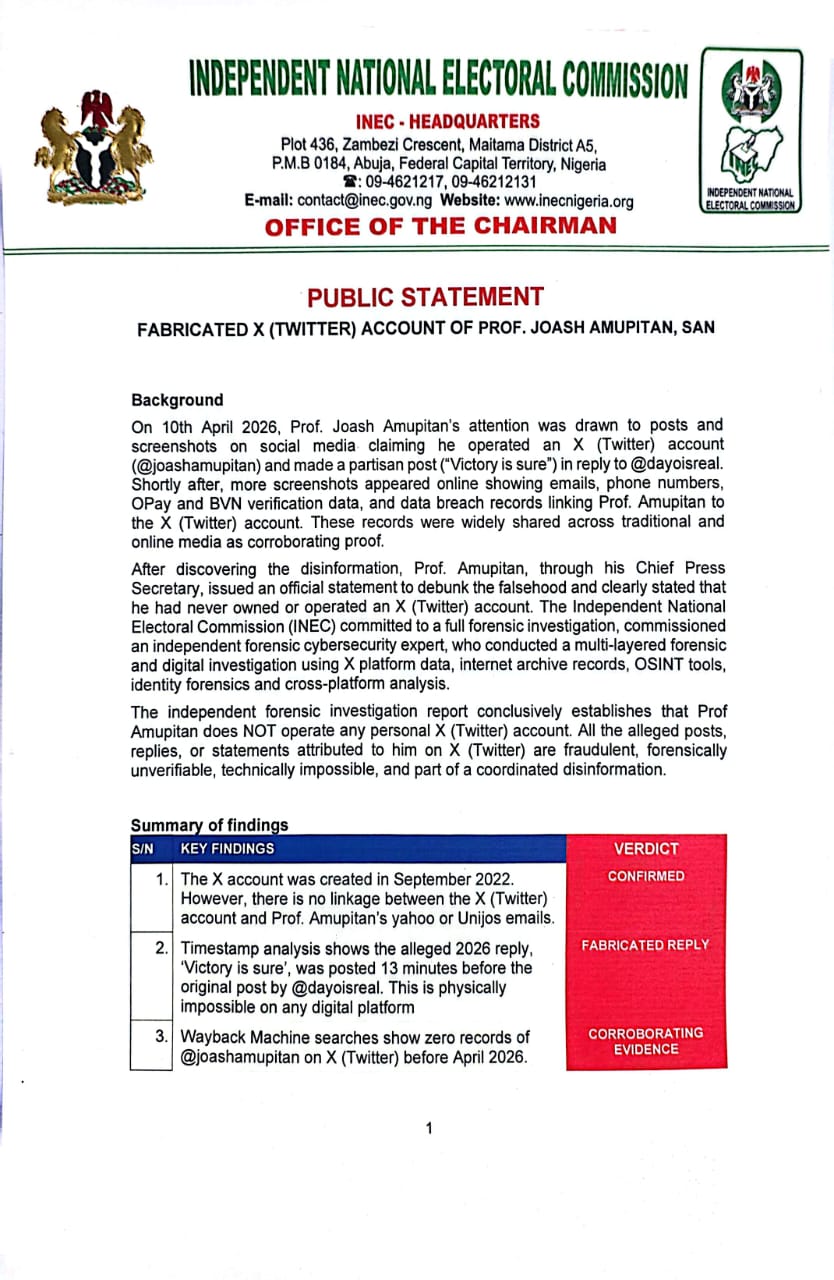
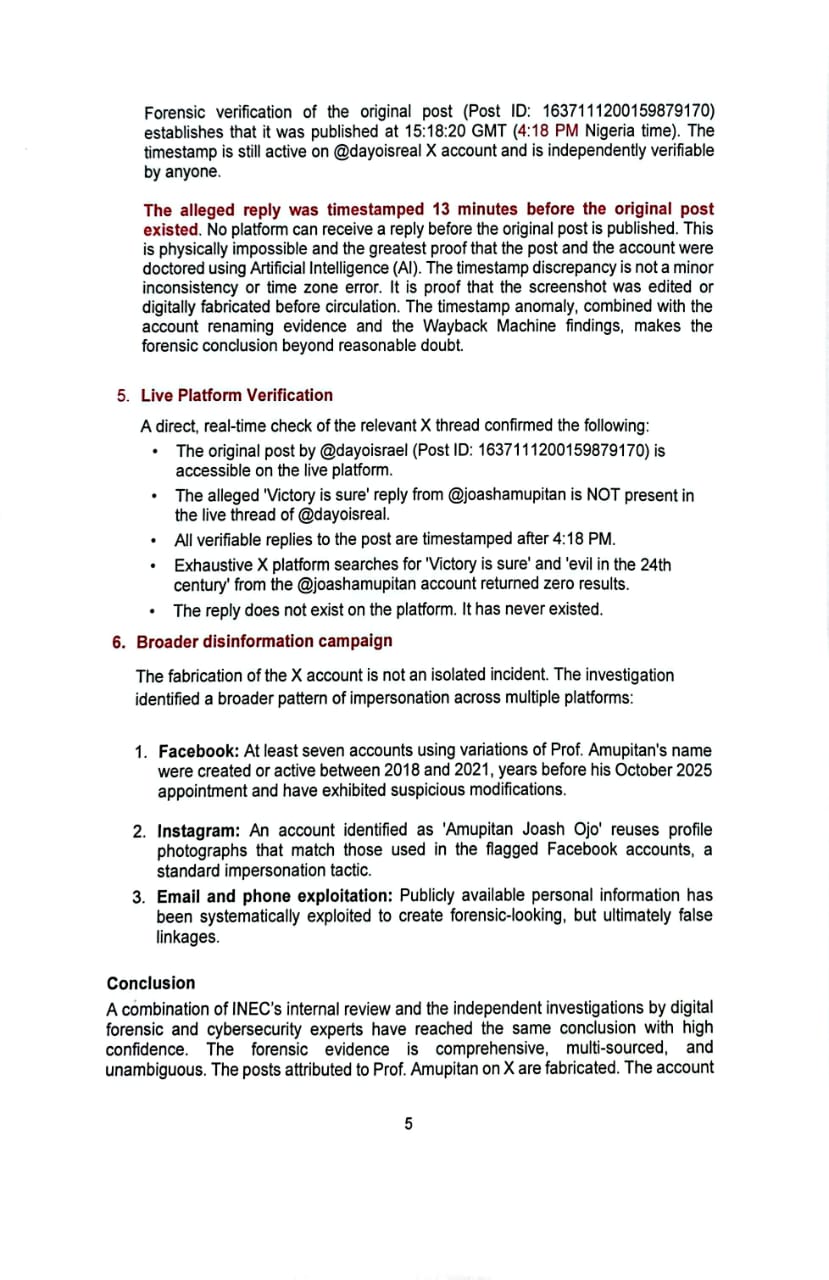
In a public statement issued by the Office of the Chairman, INEC said its findings followed a detailed forensic investigation prompted by viral screenshots claiming that Prof. Amupitan operated an account under the handle @joashamupitan and posted a reply reading “Victory is sure.”
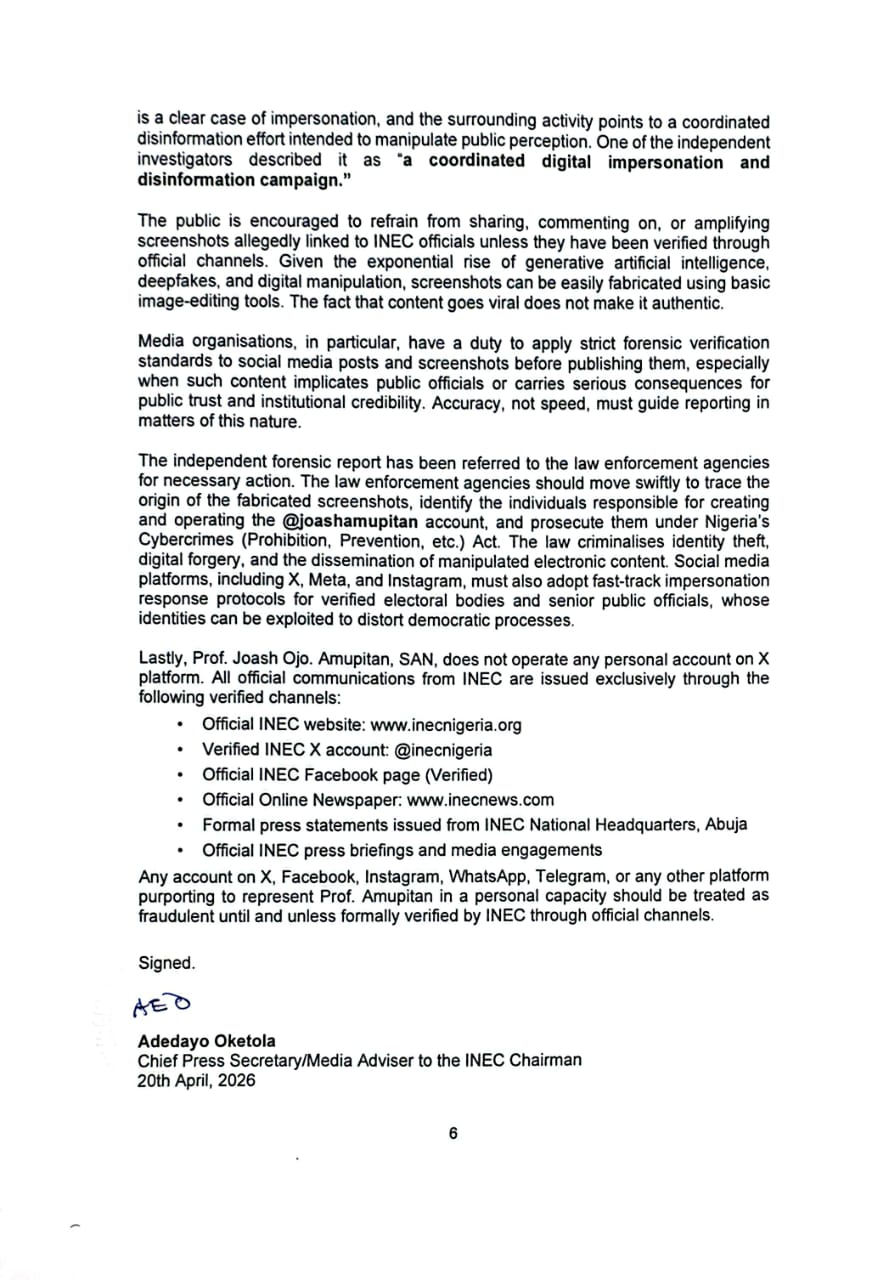
According to the commission, “the independent forensic investigation report conclusively establishes that Prof Amupitan does NOT operate any personal X (Twitter) account. All alleged posts, replies, or statements attributed to him on X (Twitter) are fraudulent, forensically unverifiable, technically impossible, and part of a coordinated disinformation.”
INEC explained that the investigation combined internal review with independent cybersecurity analysis, examining X platform data, internet archive records, OSINT tools, identity forensics and cross-platform activity.
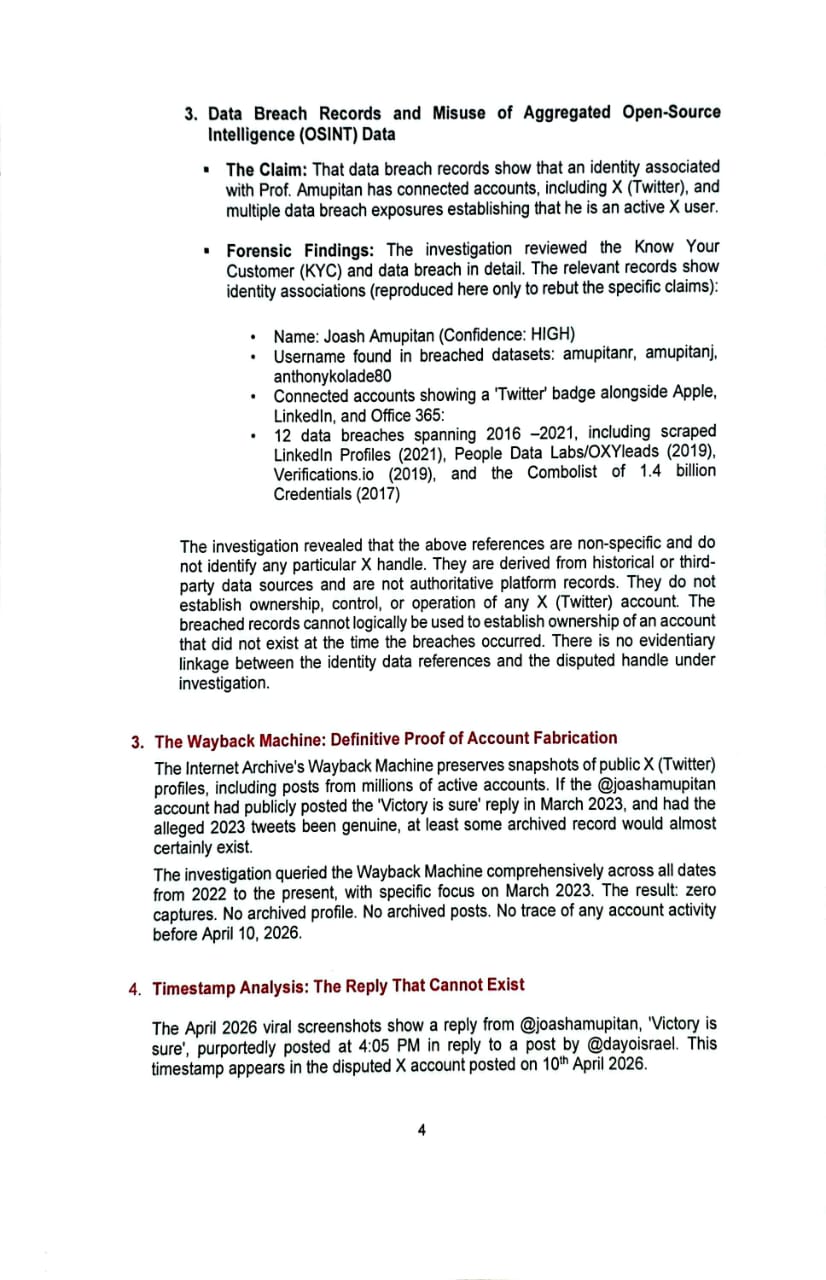
The commission highlighted a key finding from timestamp analysis, stating that the viral reply attributed to the account was posted before the original tweet it supposedly responded to. “The alleged reply was timestamped 13 minutes before the original post existed. No platform can receive a reply before the original post is published. This is physically impossible,” the report stated, adding that this was “the greatest proof that the post and the account were doctored using Artificial Intelligence (AI).”
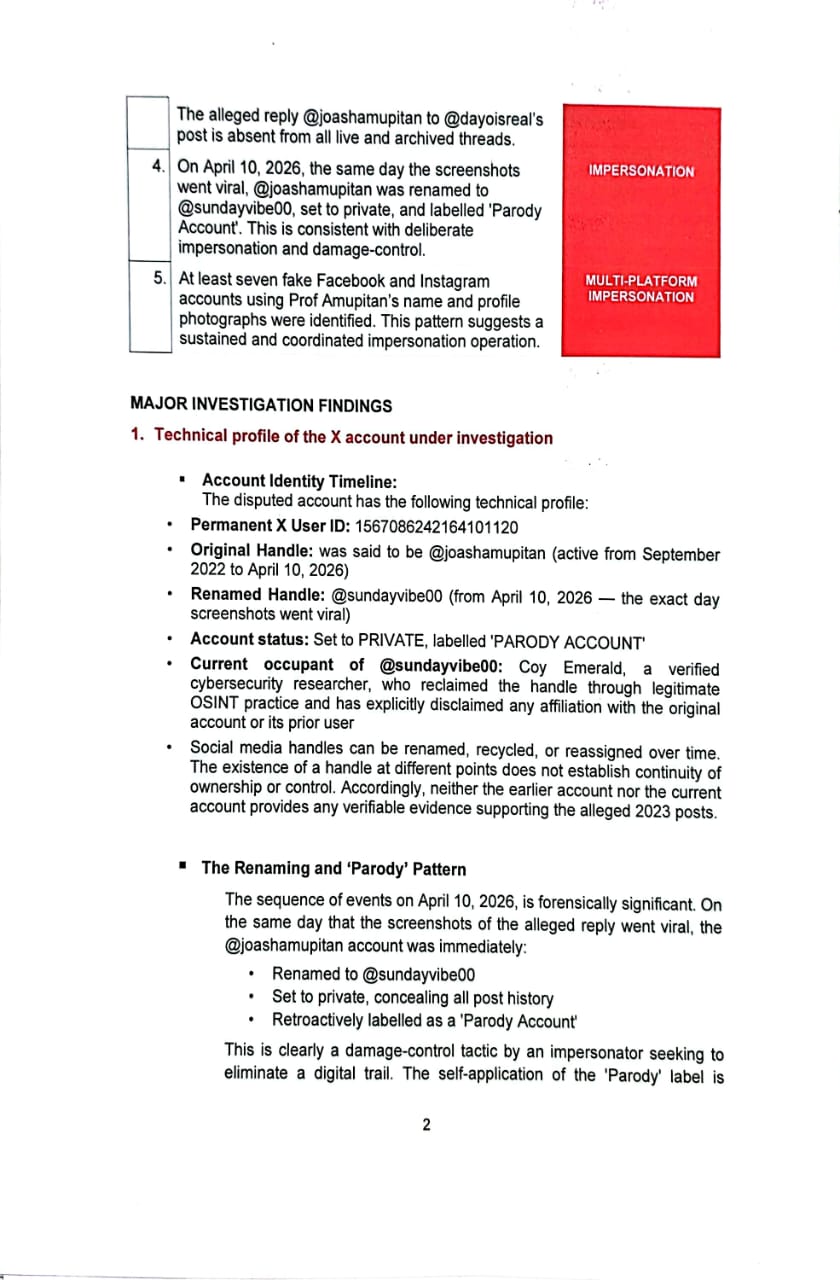
INEC also said searches on the Wayback Machine showed no archived record of the account or its activity prior to April 2026, despite claims that it had been active earlier. “No archived profile. No archived posts. No trace of any account activity before April 10, 2026,” the report noted.
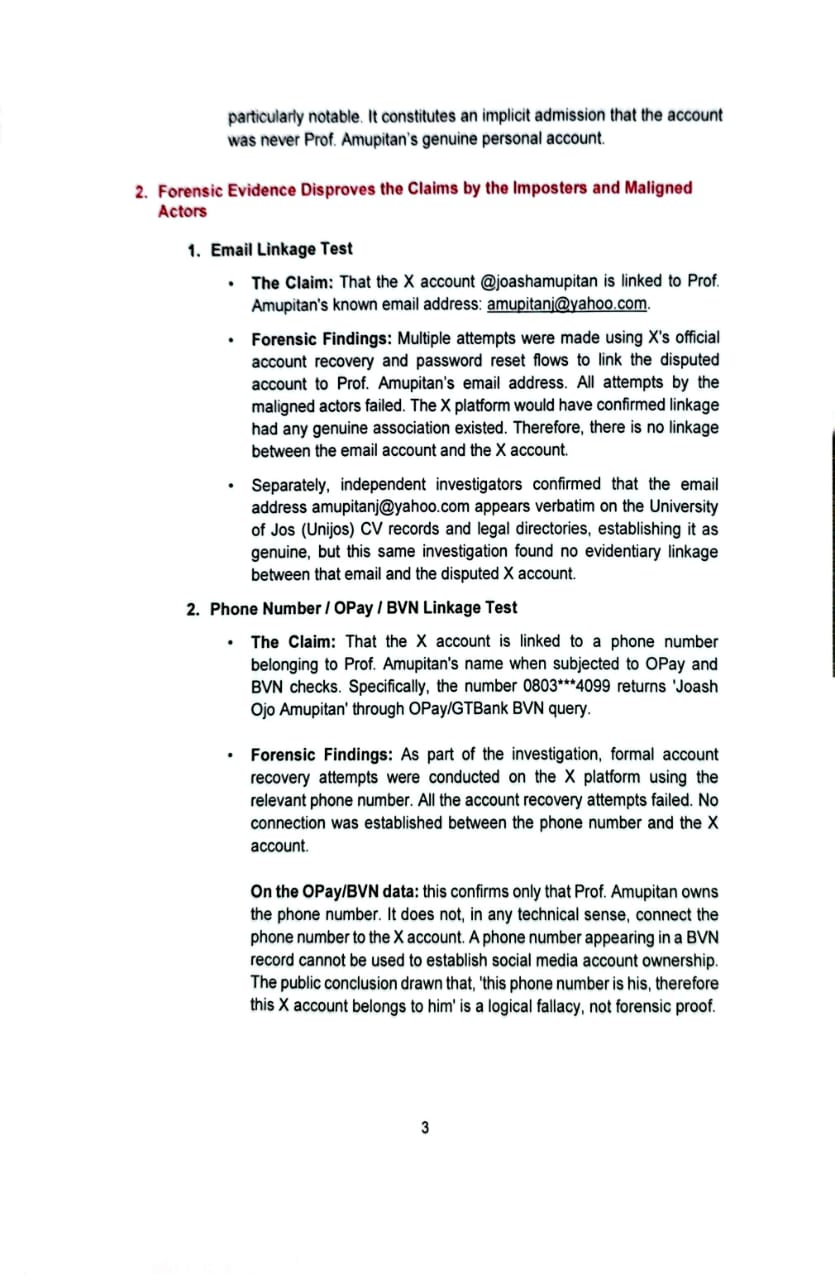
On claims linking the account to Prof. Amupitan through email and phone data, the commission said forensic tests found no connection. “There is no linkage between the email account and the X account,” the report stated, adding that attempts to verify phone number associations through platform recovery systems also failed.
The commission further dismissed reliance on data breach records and BVN-linked information as proof of ownership, describing such conclusions as “a logical fallacy, not forensic proof.”
INEC said the account in question had also undergone suspicious changes on the same day the screenshots went viral, including being renamed, set to private, and labelled as a parody account. It described this as “a damage-control tactic by an impersonator seeking to eliminate a digital trail.”
The investigation also identified a broader pattern of impersonation across multiple platforms, including Facebook and Instagram accounts using Prof. Amupitan’s name and photographs, as well as the misuse of publicly available personal data to create false digital linkages.
INEC warned the public against sharing unverified social media content, stating that “the fact that content goes viral does not make it authentic,” especially in an era of AI-generated manipulation and deepfakes.
The commission urged media organisations to apply strict verification standards before publishing such materials, noting that “accuracy, not speed, must guide reporting in matters of this nature.”
INEC confirmed that the matter has been referred to law enforcement agencies for further action, calling for those responsible for creating and disseminating the fabricated content to be identified and prosecuted under relevant cybercrime laws.
The commission reiterated that Prof. Joash Amupitan does not operate any personal X account and advised that all official communications should only be obtained through verified INEC channels, including its official website and social media accounts.
Read the statement below…………………………………………..