

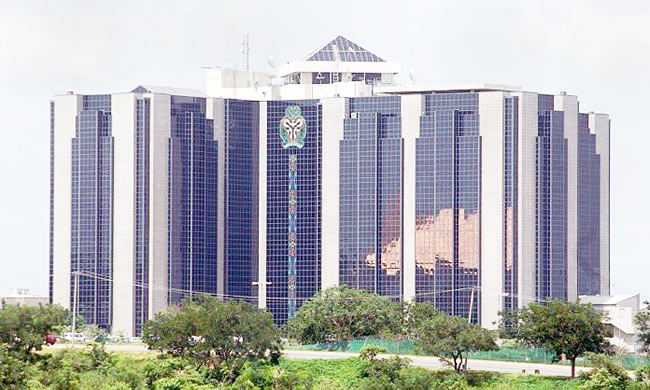

The Central Bank of Nigeria has introduced a N100 million penalty for financial institutions that carry out foreign exchange deals without sufficient supporting paperwork, according to a sweeping new compliance framework contained in the recently published fourth edition of its Foreign Exchange Manual.
In the section outlining offences and corresponding punishments, the apex bank wrote: “Authorised dealers shall pay N100m in addition to N10m per transaction” for completing foreign exchange transactions backed by inadequate documentation. The penalty is part of a larger effort to sharpen oversight of the country’s foreign currency market, raise compliance standards, and crack down on misconduct by authorised dealers and other market players.
The updated manual, released by the CBN’s Trade and Exchange Department in May 2026, represents the first major revision in nearly a decade, with the previous edition dating back to 2017. It is designed to act as a regulatory roadmap for banks, licensed buyers, exporters, investors, and ordinary Nigerians involved in foreign exchange transactions.
According to the central bank, the manual is intended to improve transparency in both the inflow and outflow of foreign currency, set clear guidelines for documentation and reporting, reinforce enforcement mechanisms, and back national economic priorities by ensuring that foreign exchange is directed toward productive activities. Beyond the N100 million fine, the manual lays out a series of escalating penalties for various infractions within the Nigerian Foreign Exchange Market.
Banks that go beyond their approved Net Open Position limits will face progressively harsher consequences. A first violation triggers a written warning. A second results in a ten-working-day suspension from the foreign exchange market. A third leads to a 90-day suspension.
The CBN has also tightened reporting rules for authorised dealers. Banks must now file daily returns on foreign exchange transactions by 10 a.m. for the previous day, as well as monthly returns within five working days after each month ends. Any failure to meet these deadlines brings sanctions. Under the revised rules, submitting returns late incurs a N500,000 penalty. Failing to submit them at all carries a minimum fine of N5 million, plus an additional N500,000 for each day the violation persists.
The CBN also warned banks against moving foreign exchange funds from one purpose to another without seeking regulatory approval first. Depending on the seriousness of the violation, the bank could face financial penalties, a suspension of its authorised dealer licence for no less than six months, or complete revocation of that licence.
Import-related transactions have received considerable attention in the updated framework. The manual mandates that importers submit Exchange Control Documents within 90 days of negotiating shipping documents with their overseas correspondent banks. Importers who miss this deadline will lose the ability to conduct valid and non-valid foreign exchange transactions, including the processing of Form M applications.
A first offence brings a 90-day restriction. A second extends that period to 180 days. A third pushes it to 360 days. A fourth results in a permanent ban from the foreign exchange market. Banks that fail to report such defaults also face sanctions, beginning with a warning and escalating to a N10 million fine for each transaction involved.
Exporters are now subject to stricter requirements as well. For non-oil exports, proceeds must be brought back into the country and deposited into the exporter’s domiciliary account within 180 days of shipment. For oil and gas exports, that window shrinks to 90 days.
Exporters who do not repatriate proceeds on time will be charged a penalty equal to one per cent of the naira value of the outstanding amount. Banks that fail to ensure their clients comply will be fined 0.5 per cent of the outstanding sum. The manual also grants the CBN authority to penalise banks for late approvals of export documentation, non-payment of export supervision levies, and failure to submit required returns on export proceeds.
Alongside the penalty structure, the revised framework introduces several operational changes aimed at making the market more efficient. These include raising the allowable advance payment for imports from 15 per cent to 30 per cent, permitting an import shortfall or excess of up to plus or minus 10 per cent of the Cost and Freight value on Form M, and eliminating processing fees for the Form NXP used in export declarations.
The CBN has also added provisions covering service exports, technology-related remittances, Pan-African Payment and Settlement System transactions, non-resident investment accounts, and tuition payments of up to $25,000 per semester for both undergraduate and postgraduate study abroad.
Additionally, the manual removes the previously mandatory Form A requirement for remittances funded through ordinary domiciliary accounts. However, banks are still obligated to verify the legitimacy and purpose of such transactions.
The central bank said the reforms came out of extensive consultations with banks, exporters, corporations, regulators, and development partners. The objective, according to the CBN, is to support a transparent, rules-based, and market-oriented foreign exchange system.
The CBN expects the updated manual to lead to better compliance, fewer transaction delays, increased market confidence, greater investment inflows, and a stronger overall integrity of Nigeria’s foreign exchange market.
CBN Governor Mr Olayemi Cardoso had earlier described the initiative as a demonstration of the apex bank’s dedication to strengthening macroeconomic stability and modernising the country’s foreign exchange administration. He noted that the revision was driven by changing global economic conditions, domestic structural adjustments, and ongoing reforms in Nigeria’s foreign exchange market.
Dr Muhammad Abdullahi, Deputy Governor of the Corporate Services Directorate, said the updated manual forms part of broader reforms launched under Cardoso’s leadership aimed at rebuilding trust, enhancing transparency, deepening market liquidity, and boosting overall market efficiency. He said the review was conducted to bring Nigeria’s foreign exchange framework in line with current market realities and international best practices.
“Our goal is to reduce transaction frictions, improve processing timelines, deepen market confidence, encourage formal market participation, and create a more seamless and efficient experience for legitimate users of Nigeria’s foreign exchange market,” he said.