

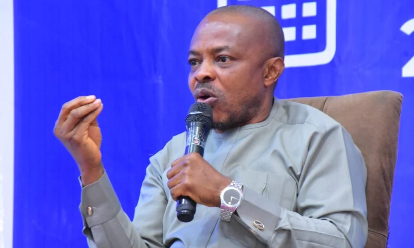

Nigeria Labour Congress (NLC) President Joe Ajaero has asserted that President Bola Tinubu’s widely proclaimed “age of prosperity” has failed to trickle down to ordinary workers, whose purchasing power continues to be severely eroded by skyrocketing inflation.
Speaking during an appearance on the Mic On Podcast hosted by Seun Okinbaloye, Ajaero argued that soaring costs for fuel, food, transportation, and accommodation have rendered the current ₦70,000 minimum wage largely inadequate.
“Prosperity is not with the Nigerian worker,” Ajaero stated, noting that while macroeconomic indicators might suggest a slowdown in the inflation rate, citizens continue to bear the crushing weight of cumulative price hikes. Nigeriancultural events
Reflecting on the negotiations that led to the ₦70,000 wage agreement, Ajaero explained that organized labour accepted the figure partly on the government’s assurance that palliative measures such as compressed natural gas (CNG) infrastructure, vehicle conversion kits, and direct cash transfers would cushion the blow of fuel subsidy removal.
He contended that these promises remain largely unfulfilled or insufficient, pointing out that the sparse rollout of CNG buses and refueling stations has done little to alleviate high transit costs.
Ajaero emphasized that nominal wage increases are meaningless without stable living costs and currency value.
“If I get N500,000 minimum wage, and I can’t pay my house rent, of what use?” he asked. He further suggested that petrol prices could drop to approximately ₦500 per liter if domestic crude oil were supplied to local refineries under preferential pricing structures.
Addressing the broader political landscape, the NLC president dismissed ideological differences among major contenders ahead of the 2027 elections, arguing that President Tinubu, former Vice President Atiku Abubakar, and Labour Party figurehead Peter Obi share identical free-market economic philosophies.
Ajaero warned that continued government inaction regarding unresolved welfare concerns and economic pressures could ultimately provoke renewed industrial unrest across the country.