

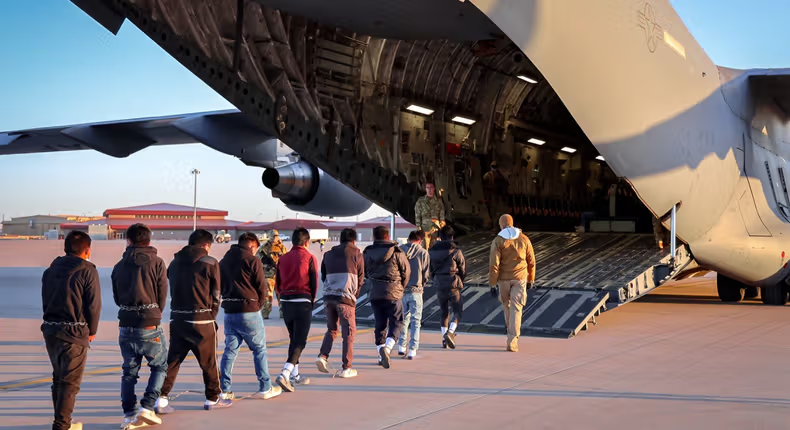

The United States has reportedly deported nine migrants, under the administration’s third-country deportation strategy, to Cameroon.
According to a report by The New York Times, the deportees, none of whom are Cameroonian nationals, were placed on a January 14 Department of Homeland Security flight from Alexandria, Louisiana, without being told their destination until they were restrained in handcuffs and chains.
The Department of Homeland Security, the State Department, and Cameroon’s Ministry of External Affairs have not publicly confirmed any agreement authorising such transfers.
Cameroon now joins Rwanda and Eswatini among other African nations reported to have accepted third-country deportees from the United States under controversial arrangements.
These deals typically involve migrants who cannot be returned to their home countries due to diplomatic barriers, lack of documentation, or security concerns.
The policy has triggered legal challenges in U.S. courts, where immigration advocates argue that deporting individuals with active protections or pending claims may violate due process and non-refoulement obligations under international law.
In several cases, federal judges have temporarily halted removals while reviewing whether deportees face potential harm or unlawful transfer. Rights groups contend that sending migrants to countries with which they have no ties raises fresh humanitarian and legal concerns.
For President Trump, the expansion of third-country deportation agreements aligns with a central campaign promise: accelerating removals and tightening border enforcement.
Since returning to office, his administration has prioritised faster deportation pathways, particularly for migrants whose home governments refuse repatriation or delay documentation.