

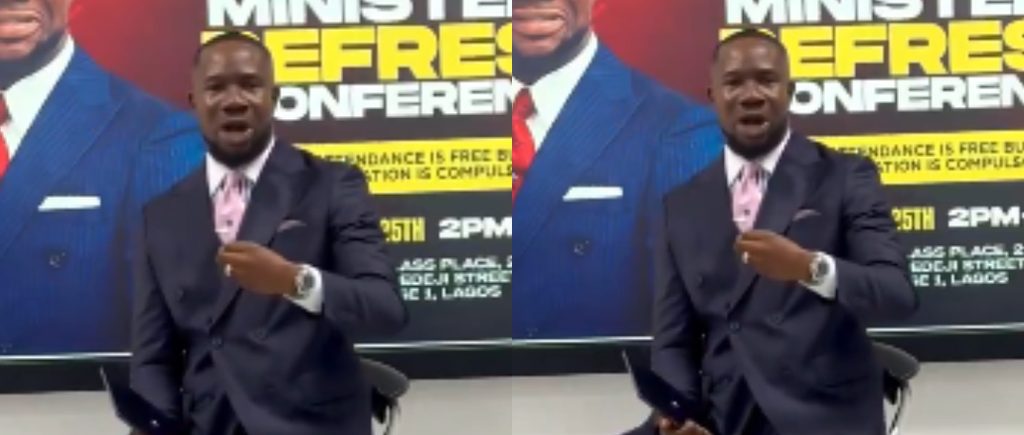

Apostle Harrison Ayintete has explained why his church insists on collecting 10 per cent tithes from members, saying the money is needed to cover the expenses associated with running a church.
The cleric argued that churches have financial responsibilities, including paying for utilities, maintaining facilities and purchasing equipment needed for worship services. According to him, members are expected to fulfil their financial obligations to the church they belong to.
Speaking about the practice, Ayintete maintained that churches have the right to agree on a specific percentage of members’ earnings to fund their activities. He also referenced the early church, where believers reportedly sold their possessions and contributed towards the collective needs of the community.
“There is no scripture that says A church cannot give twenty percent or give thirty percent. If the early church could come together, And say we are selling our land and we are giving everything. So we can also come together and say we are doing ten percent,” he said.
Addressing arguments over whether tithing is supported by the Bible, Ayintete urged people to consider the practical financial needs of churches rather than concentrating only on biblical references to Melchizedek and the Old Testament.
He questioned how churches would meet their daily expenses without financial contributions from members, pointing to the cost of diesel and microphones as examples.
“We have a church to run, yes or no? There is diesel to buy, yes or no? There’s microphone to buy, yes or no?” he asked.
The apostle further revealed that his congregation had adopted a policy requiring members to contribute 10 per cent of their individual income to support the church’s needs.
“As a church we have said that ten percent of individual members’ income is what we cater to what we need in this church. And you must give it. If you say you are a member, you give it,” he stated.
Ayintete maintained that his church’s position on tithing should be understood as an agreed financial requirement for members rather than a debate centred entirely on biblical interpretations.
“Leave Melchizedek. Leave Old Testament. Na the levy we dey collect be this for this particular institution. If you say you are with us, you give it,” he concluded.