

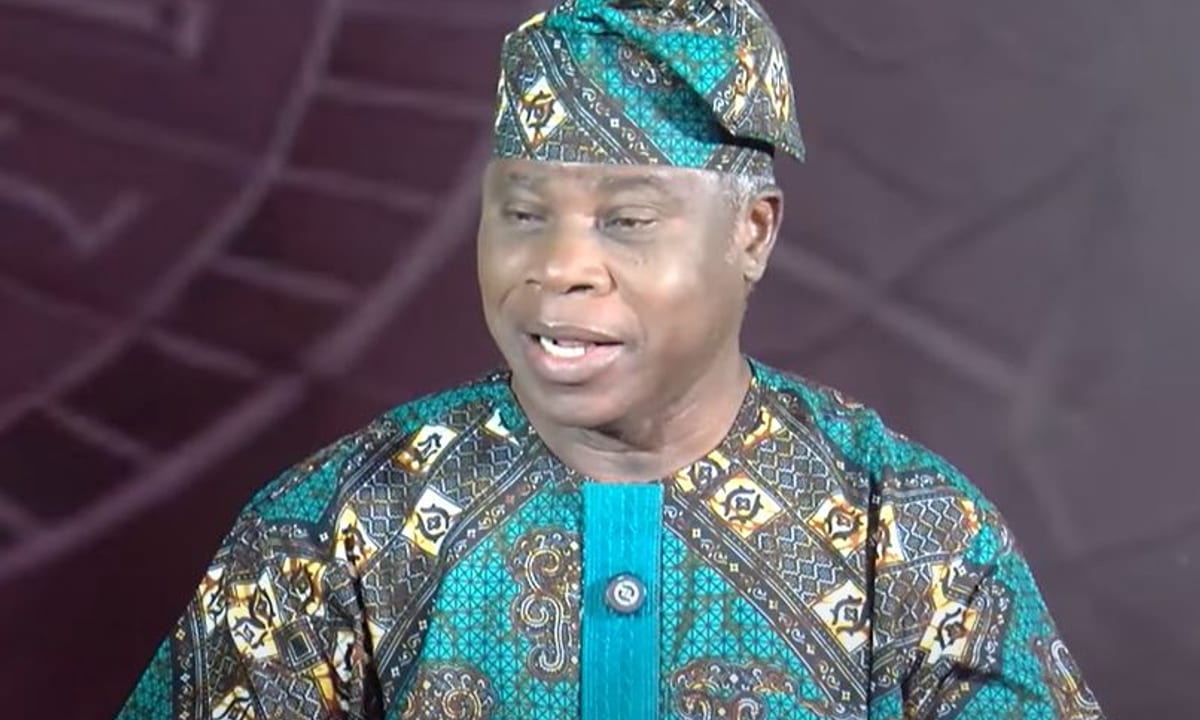

A public policy advocate and retired federal civil servant, Dr Akin Fapohunda, has warned that Peter Obi’s possible victory in the 2027 presidential election could heighten tensions between the Yoruba and the Igbo communities, potentially creating a crisis similar to the situation in Rwanda.
In an interview on social media, Fapohunda expressed concern that a political scenario in which Obi secures support from northern voters to defeat President Bola Tinubu could reignite ethnic divisions, particularly between the Yoruba and the Igbo.
Speaking during a discussion on the political implications of the 2027 election, he argued that some Yoruba people might interpret such an outcome as an attempt by the Igbo and the North to deny the South-West its perceived opportunity to retain the presidency.
He said, “If the North prevails and knocks Tinubu out, all the South will unite to say we have been let down, and the North is in control.
“And if we now come to the South, the Igbos happen to browbeat Tinubu and knock him out, the Yoruba-Igbo problem will emerge again in a voracious manner.
“I can imagine it. In fact, it will cause the greatest damage to the polity. I mean, let’s be raw. I don’t sugarcoat it.”
Fapohunda further warned that a political alliance between Obi and northern political interests could generate resentment among some Yoruba voters, who might see Tinubu’s removal as an attempt to undermine the South-West’s political interests.
He added, “It’s assumed that what we have now is the turn of the South, the turn of the South-West.
If Obi and Kwankwaso had to come in and obliterate the South-West’s second term, the war between the Yorubas and the Igbos will go to the highest level.
“The argument will be that the Igbo connived with the North to knock out Tinubu. Tinubu is not performing, but you would expect his brothers to defend him.”
The policy advocate said the possible consequences of such political developments should concern Nigerians, warning that ethnic sentiments could become more pronounced as the 2027 election approaches.
However, he questioned the argument that the presidency should return to the South-West, pointing to what he described as the region’s considerable representation in the nation’s highest political office since the beginning of the Fourth Republic in 1999.
Fapohunda argued that the South-West had already produced a president who served for eight years and currently has another Yoruba president in office, while the South-East had yet to produce a president or vice-president during the same democratic period.
He asked, “How can the Yorubas, in all good conscience, claim that the presidency should come to them because, in this Fourth Republic, 27 years now, we have had a Yoruba president for eight years?
“Now we have a Yoruba president again, doing almost four years now. Whereas, in these 27 years, an Igbo man has never even been vice-president, let alone president.”
He maintained that the debate over power rotation and political succession required serious national discussion, urging Nigerians to consider the broader implications of ethnic and regional sentiments rather than allow emotions to dictate their political choices.