

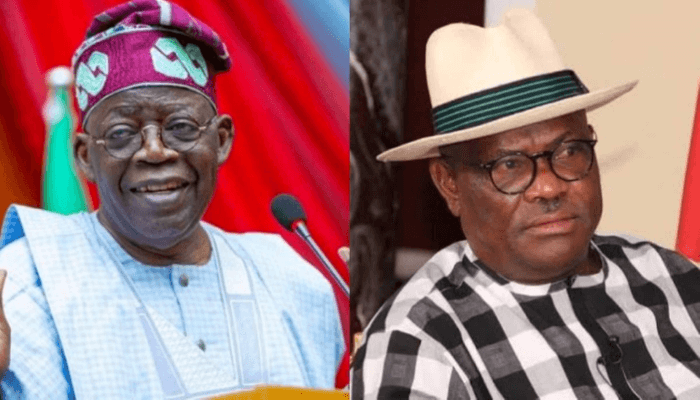

FCT Minister Nyesom Wike says only President Bola Tinubu has the authority to remove him from office, dismissing calls by critics who have demanded his sack over the Rivers political crisis.
“People who say, ‘sack me,’ it doesn’t lie in their mouth. If my appointor believes that I cannot offer anything again, he has the right; it is not that you should tell him,” Wike said during his thank-you tour in Obio/Akpor Local Government Area.
He added, “Power is not dashed, you struggle for it. After all, if Donald Trump does not have the power, will he go to Venezuela to pick a president?”
Wike also told the audience that the people of Obio/Akpor had the political strength to determine who governs. “For the people of Obio/Akpor, we have the power to dictate who will rule,” he said.
His comments followed calls by the Ijaw Youth Council (IYC) for his removal over the impeachment proceedings initiated against Governor Siminalayi Fubara by the Rivers State House of Assembly.
Lawmakers accused Fubara and his deputy of gross misconduct, prompting a seven-count impeachment move. The Assembly’s spokesperson, Enemi George, rejected claims that Wike engineered the process, saying it was “insulting to reduce the activities of an institution created by the Constitution to just politics or an individual.”
“This is pouring oil into water, and those two don’t mix unless boiled,” he said, adding that while he was politically aligned with Wike, constitutional responsibilities should not be conflated with political disputes.
The rift between Wike and Fubara, rooted in control of political structures in Rivers State, has continued to widen despite President Tinubu’s previous intervention. Wike has accused the governor of reneging on commitments, describing it as a breach of trust, and also warned APC leaders backing Fubara to keep off Rivers affairs.
Rivers State is a major oil-producing state and a key political bloc in the South-South. Stakeholders have expressed concerns that the prolonged dispute between the two men is affecting governance and stability in the state.