

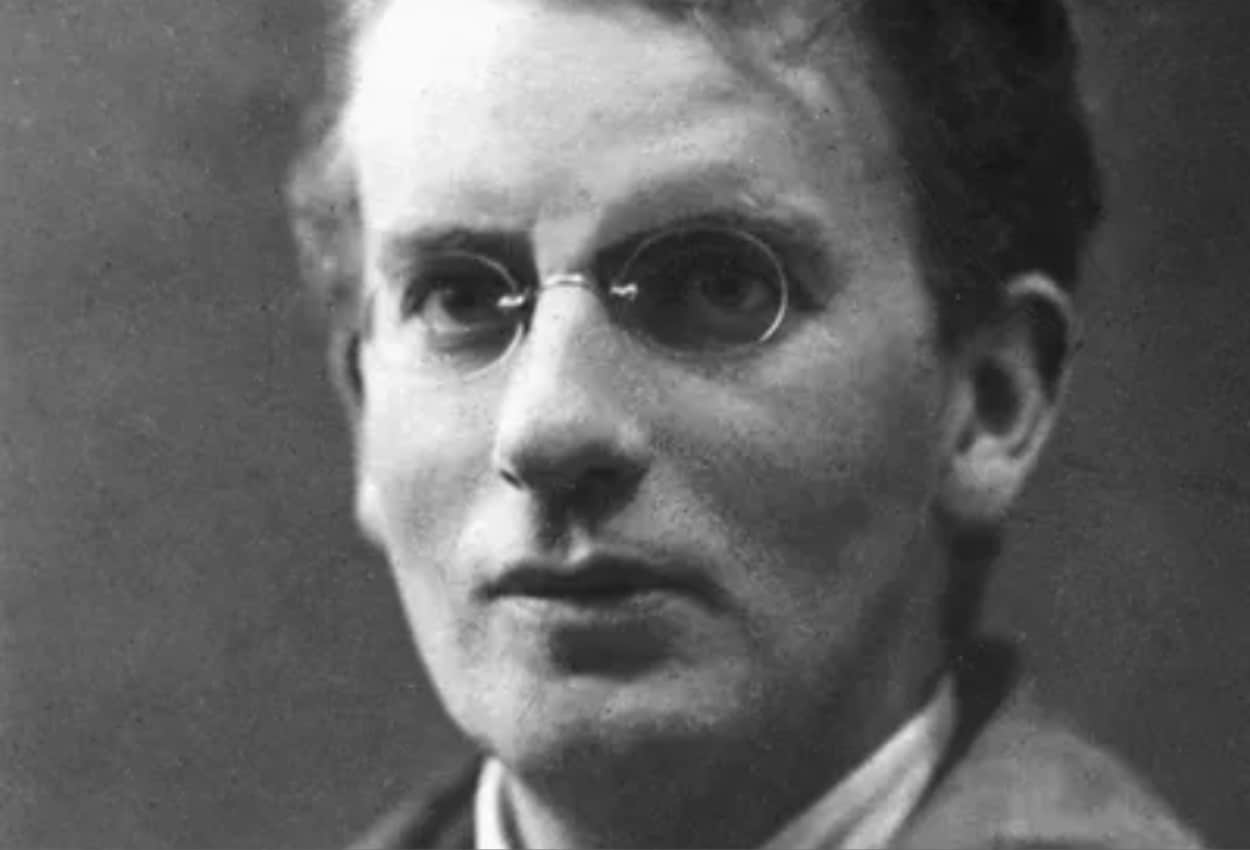

John Logie Baird (13 August 1888 – 14 June 1946) was a Scottish inventor and electrical engineer. He showed the world’s first mechanical television system on 26 January 1926. Later, he invented the first publicly demonstrated colour television system and the first working electronic colour television picture tube.
In 1928, the Baird Television Development Company made the first transatlantic television transmission. Baird’s early inventions and his part in bringing broadcast television into homes have made him an important figure in television history.
Profile Summary
| Category | Details |
|---|---|
| Full Name | John Logie Baird |
| Date of Birth | 13 August 1888 |
| Place of Birth | Helensburgh, Dunbartonshire, Scotland |
| Date of Death | 14 June 1946 (aged 57) |
| Place of Death | Bexhill, Sussex, England |
| Resting Place | Baird family grave in Helensburgh Cemetery |
Education
| Category | Details |
|---|---|
| School | Larchfield Academy, Helensburgh |
| Alma Mater | Royal Technical College (now University of Strathclyde); University of Glasgow |
Career & Occupations
| Category | Details |
|---|---|
| Occupations | Inventor; Entrepreneur |
| Known For | The world’s first mechanical television system, including the first mechanical colour television |
Organizations & Positions
| Organization / Role | Details |
|---|---|
| Cable & Wireless Ltd | Consulting Technical Adviser (from 1941) |
| John Logie Baird Ltd | Director |
| Capital and Provincial Cinemas Ltd | Director |
Personal Life
| Category | Details |
|---|---|
| Spouse | Margaret Albu (m. 1931) |
| Children | 2 |
Awards & Honors
| Award / Honor | Year |
|---|---|
| Member of the Physical Society | 1927 |
| Member of the Television Society | 1927 |
| Honorary Fellow of the Royal Society of Edinburgh | 1937 |
Biography
Baird was born on 13 August 1888 in Helensburgh, Dunbartonshire. He was the youngest of four children. His father, Reverend John Baird, was the minister at St Bride’s Church, and his mother, Jessie Morrison Inglis, was the orphaned niece of a wealthy shipbuilding family from Glasgow.
He went to Larchfield Academy (now part of Lomond School) in Helensburgh, then attended the Glasgow and West of Scotland Technical College and the University of Glasgow. During college, Baird worked as an engineering apprentice. The tough conditions in industrial Glasgow influenced his socialist beliefs and affected his health. He became an agnostic, but this did not harm his relationship with his father. His studies were interrupted by the First World War, and he did not return to finish his degree.
In early 1915, he volunteered for the British Army but was found unfit for active duty. Since he could not serve at the front, he worked for the Clyde Valley Electrical Power Company, which was involved in munitions work.
Other inventions
Some of Baird’s early inventions did not work out. In his twenties, he tried to make diamonds by heating graphite. He later invented a glass razor that did not rust but broke easily. Inspired by pneumatic tyres, he tried to make pneumatic shoes, but the balloons inside burst. Years later, a similar idea was used for Dr. Martens boots. He also invented a thermal undersock, called the Baird undersock, which had some success. Baird often had cold feet, and after several attempts, he found that adding an extra layer of cotton inside the sock helped keep his feet warm.
Between 1926 and 1928, Baird tried to create an early video recording device called Phonovision. The system used a large Nipkow scanning disk connected to a record-cutting lathe. This setup produced a disc that could record a 30-line video signal. Technical problems stopped further development, but some original Phonovision discs still exist.
Baird also worked on fibre-optics, radio direction finding, infrared night viewing, and radar. His exact role in developing radar is debated, since the UK government has never officially recognized his wartime defence projects. According to his son, Malcolm Baird, in 1926 Baird filed a patent for a device that made images from reflected radio waves, which was very similar to radar, and he was in contact with the British government at the time. However, his contribution to radar is disputed. Some experts say Baird’s “Noctovision” was not radar. Unlike radar, Noctovision could not measure the distance to a subject or find its position in three-dimensional space.
Death
From December 1944, Logie Baird lived at 1 Station Road in Bexhill-on-Sea, East Sussex. He died there on 14 June 1946 after having a stroke in February. The house was demolished in 2007, and apartments called Baird Court now stand on the site. Logie Baird is buried next to his parents in Helensburgh Cemetery, Argyll, Scotland.
Honours and portrayals
Blue plaque erected by Greater London Council at 3 Crescent Wood Road, Sydenham, London
Australian television’s Logie Awards are named in honour of John Logie Baird and his role in inventing television.
Baird is the only person to be featured posthumously on This Is Your Life. He was honoured by Eamonn Andrews at the BBC Television Theatre in 1957.
In 2014, the Society of Motion Picture and Television Engineers (SMPTE) added Logie Baird to The Honor Roll. This list “posthumously recognizes individuals who were not awarded Honorary Membership during their lifetimes but whose contributions would have been sufficient to warrant such an honor”.
In 2023, John MacKay played John Logie Baird in the ITV series Nolly and in the Doctor Who episode “The Giggle”.
Legacy
In 2013, Historic Environment Scotland put up a plaque to honour Logie Baird. The plaque is located in Helensburgh.