

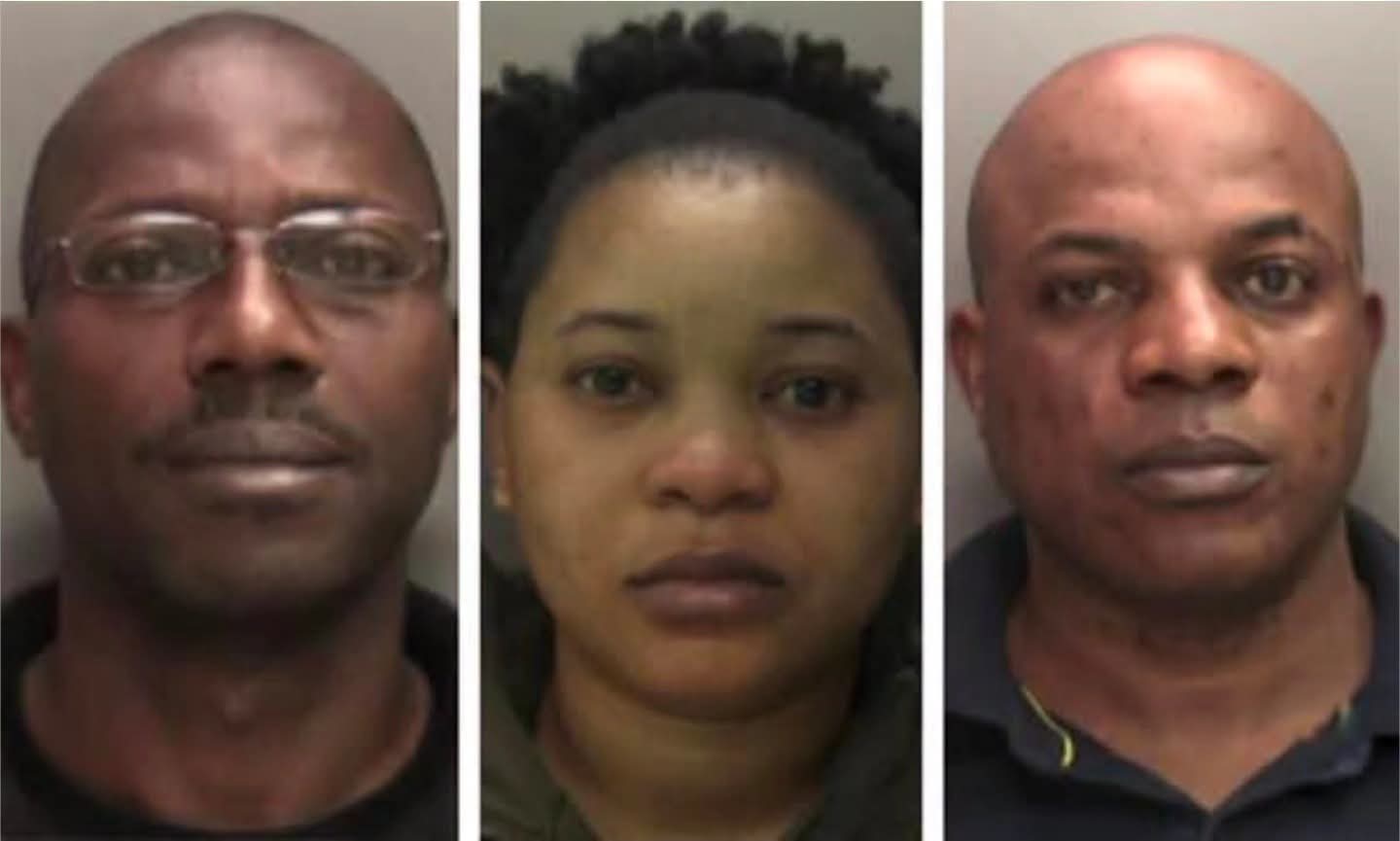

A former NHS employee, Emmanuel Nbanga, his Nigerian wife and Nigerian businessman have been found guilty in the United Kingdom of conning the NHS out of £279,000 by selling its own equipment back to the service – sometimes more than once.
Nbanga, 45, who hails from Sierra Leone but grew up in Nigeria before migrating to the UK, took medical equipment from the Worcestershire Acute Hospitals NHS Trust and then sold it back to the trust, the NHS Counter Fraud Authority (NHSCFA) said.
Nbanga was found guilty of fraud by abuse of position and fraudulent trading last Tuesday, following a trial at Worcester Crown Court.
His wife, Remilekun Olusesi, and one other accomplice, Solomon Adeyemi, a Birmingham based Nigerian businessman, were also convicted by the jury.
GeographicReference
Dave Horsley, from the NHSCFA, said the case was shocking “especially since the stock… was intended for operations on patients”.
Adeyemi, 57, of Cole Hall Lane, Birmingham, was convicted of fraudulent trading.
Olusesi, 40, of Skye Close, Smith’s Wood, Solihull, was found guilty of money laundering through the acquisition, retention, use or control of criminal property.
The NHSCFA said Nbanga had been employed as a materials management assistant at the Alexandra Hospital, Redditch.
Between October 2016 and September 2019, he stole medical supplies from operating theatre stock rooms at the hospital and passed it onto Adeyemi, who was the director of a company called Ultimate Medical (UK) Ltd (UML), based in Tyseley, Birmingham.
The company then sold the items back to the hospital trust, so it was effectively buying back its own stock, sometimes three or four times.
Horsley said the trust became suspicious when it started a tendering process for medical supplies and discovered UML was selling at unusually low prices.
The trust then noticed identification numbers on some delivered items matched those of items that had been previously ordered and delivered.
An investigation found that funds paid by the trust into UML’s business account were redirected to Lawyis Medical UK Ltd, a shell company set up by Olusesi, and to personal accounts in the names of all three defendants.
Horsley said the trust found some of the stock supplied was not fit for purpose and they had to be identified and taken out of circulation for the safety of patients.
“The more they looked the more it unravelled,” he said.
The three will be sentenced at a later date and both Adeyemi and Nbanga were remanded in custody as the judge considered them to be a flight risk.
Stephen Collman, managing director of Worcestershire Acute Hospitals NHS Trust, said: “This was an extensive and sustained programme of fraud which cost the NHS hundreds of thousands of pounds.”
He also said it was “made all the worse by the fact that it was carried out by NHS staff members abusing their positions of trust”.
Horsley said aside from the financial impact, cases such as this could mean “people’s trust in the NHS is compromised”.


