

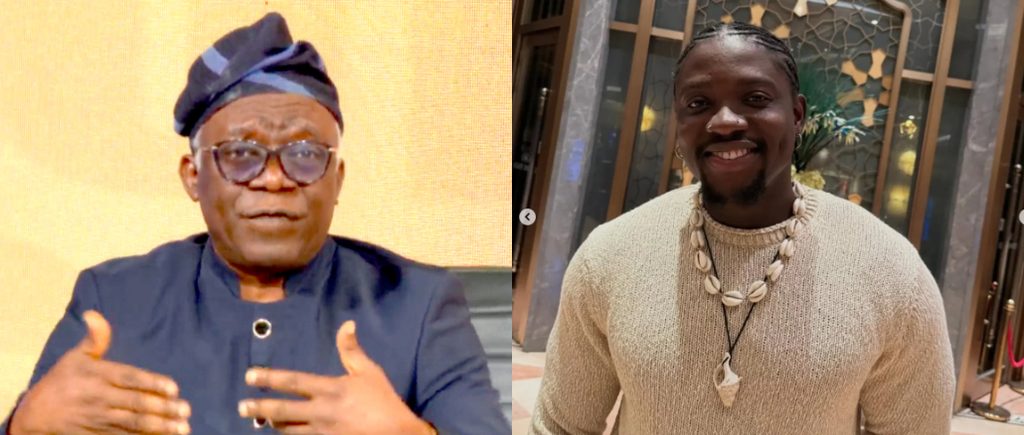

Human rights lawyer and Senior Advocate of Nigeria (SAN), Femi Falana, has criticised the Nigerian Bar Association (NBA) over its decision to invite social media activist Martins Vincent Otse, popularly known as VeryDarkMan, to participate in its 66th Annual General Conference in Port Harcourt, Rivers State.
Falana expressed his concerns during an appearance on Channels Television’s Sunrise Daily on Thursday, August 27, while reacting to the controversy surrounding VeryDarkMan’s appearance at the conference.
VeryDarkMan had featured in a panel session titled “Known Gunmen or Unknown Gunmen,” where he spoke about insecurity in Nigeria and shared experiences from his activities and visits to communities affected by violence and attacks. His invitation has since generated mixed reactions among lawyers and members of the public.
Speaking on the issue, Falana argued that professional conferences organised by the NBA should prioritise intellectual engagement by inviting individuals with proven knowledge and experience in the subjects being discussed.
According to him, the association had previously invited people who had established themselves in their respective fields and could provide valuable insights to lawyers.
“In those days, the NBA brought individuals who had paid their dues, who were coming to engage lawyers intellectually. We wanted to learn from them, and so none of our conferences was a circus show in the past,” Falana said.
The senior lawyer specifically questioned the choice of a speaker for a discussion centred on national security, stressing that such a subject requires someone with demonstrable experience in the country’s security architecture.
“If you are bringing an expert to discuss the security of the country, either from the private or public sector, such an individual must have contributed to the security architecture of the country,” he said.
Falana further maintained that inviting individuals without relevant experience to speak on specialised issues could undermine the purpose of the conference.
“But when you bring people who have nothing to do with the security of the country, there are problems,” he added.
He compared the situation to inviting someone without professional experience in journalism or academia to speak to media practitioners about press freedom.
Falana acknowledged that lawyers should listen to members of the public, but maintained that the choice of speakers should be determined by the subject under discussion. He said that if the topic were justice delivery, hearing directly from members of the public would be appropriate. However, discussions on national security, in his view, should involve security professionals or people directly affected by insecurity, such as victims of abduction.