

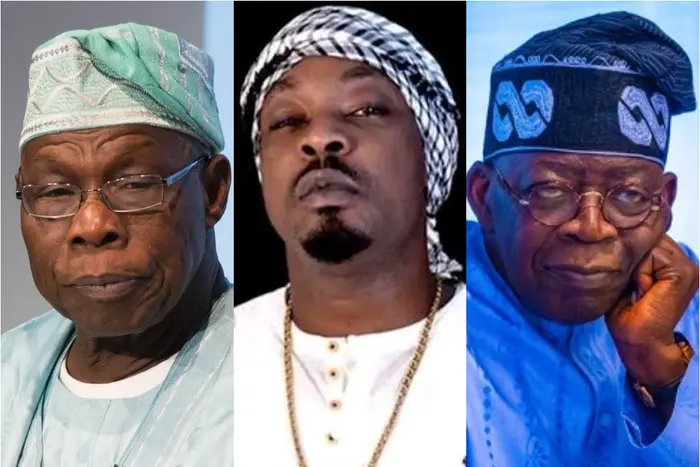

In 2004, the Nigerian rapper released his third studio album, Jaga Jaga, and its title track quickly became more than just another popular song. It became a blunt musical commentary on corruption, poverty, insecurity, and the frustrations of ordinary Nigerians.
The song was so direct that it caught the attention of the country’s leader at the time, former President Olusegun Obasanjo.
What followed was a clash between a veteran rapper and a sitting president, with the song eventually restricted from radio airplay but continued to circulate among Nigerians, particularly in nightclubs and on the streets.
)
The song’s chorus was catchy. Abdulkareem sang, “Nigeria jaga jaga, everything scatter scatter, poor man dey suffer suffer, Gbosa, gbosa…
Which armed robber no want money? Which armed robber no want jolly? Nah political armed robber be that. Nah wetin dey kill Nigeria be that.”
By describing political figures as “political armed robber[s]”, Abdulkareem placed corruption and bad governance in the same moral space as criminality. The song captured the anger of Nigerians who felt that the promises of democracy had not translated into better living conditions and the street listened.
When ‘Jaga Jaga’ reached Obasanjo
Obasanjo was Nigeria’s sitting president. While “Jaga Jaga” gained traction among Nigerians because of its depiction of everyday frustrations, the song also became a problem for the government.
The song was banned from radio airplay under the Obasanjo administration, although it continued to be played in nightclubs and circulated outside mainstream broadcasting.