

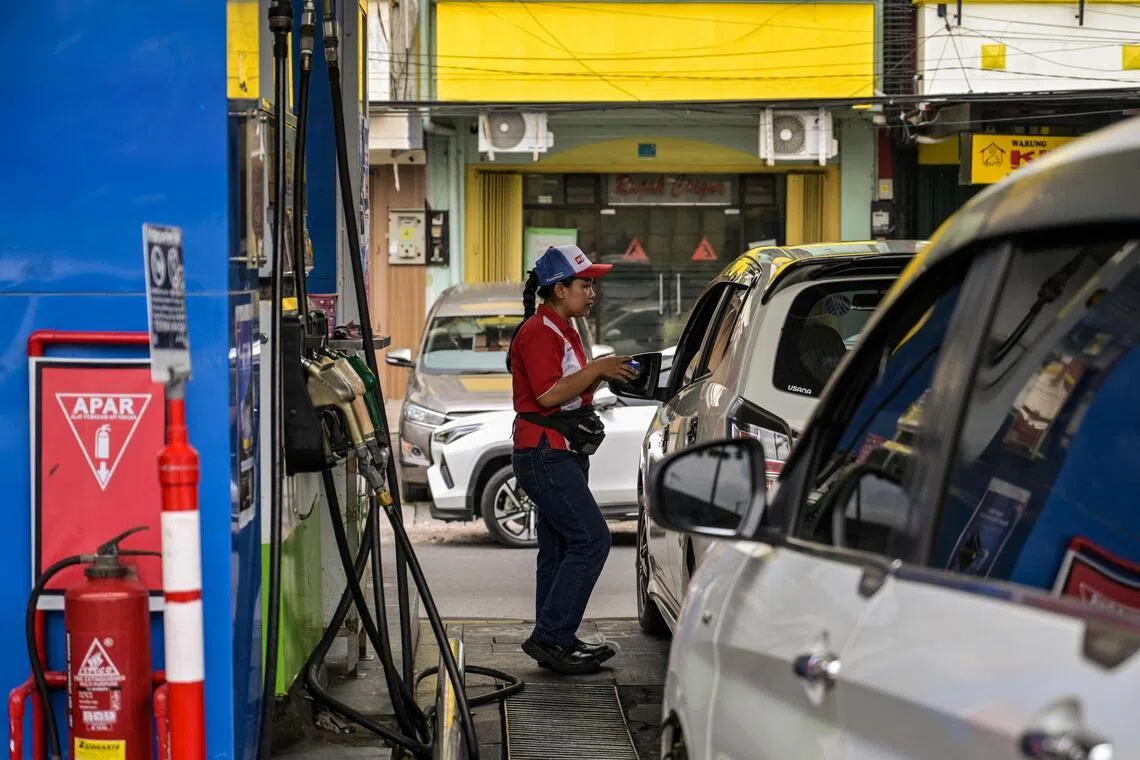

Indonesia has introduced fuel rationing and work-from-home measures for civil servants as it responds to rising global energy prices linked to tensions in the Middle East.
Announcing the measures, Airlangga Hartarto said private vehicle owners will now be limited to purchasing a maximum of 50 litres of fuel per day.
“To ensure fuel distribution, the government will regulate purchases… with a reasonable limit of 50 litres per vehicle,” he said. In addition, civil servants will work from home every Friday, official vehicle use will be reduced by half, and government travel will be cut by up to 70 percent.
The restrictions will not apply to essential sectors such as healthcare, security, energy, and food supply. Indonesia estimates the measures could save between 121 and 130 trillion rupiah ($7.1–$7.6 billion), with policies set to take effect immediately and reviewed every two months.
Despite the global surge in oil prices—driven in part by disruptions around the Strait of Hormuz, the government has said it will not increase fuel prices for now. “We need the support and cooperation of the public. We need to purchase fuel reasonably and wisely,” said Bahlil Lahadalia, encouraging citizens to use public transport or electric vehicles.
Indonesia, Southeast Asia’s largest economy, remains a net oil importer despite domestic production and continues to heavily subsidise fuel, with subsidies accounting for about $12.3 billion, roughly five percent of the 2026 national budget.
Officials maintain that economic fundamentals remain stable, even as global oil prices have risen above $100 per barrel, far exceeding the $70 benchmark used in the country’s budget planning.
The government also announced adjustments to public spending, including reducing its free school meals programme by one day per week, while maintaining in-person schooling. Authorities say further measures, including possible work-from-home policies for the private sector, may be considered if global conditions worsen.