

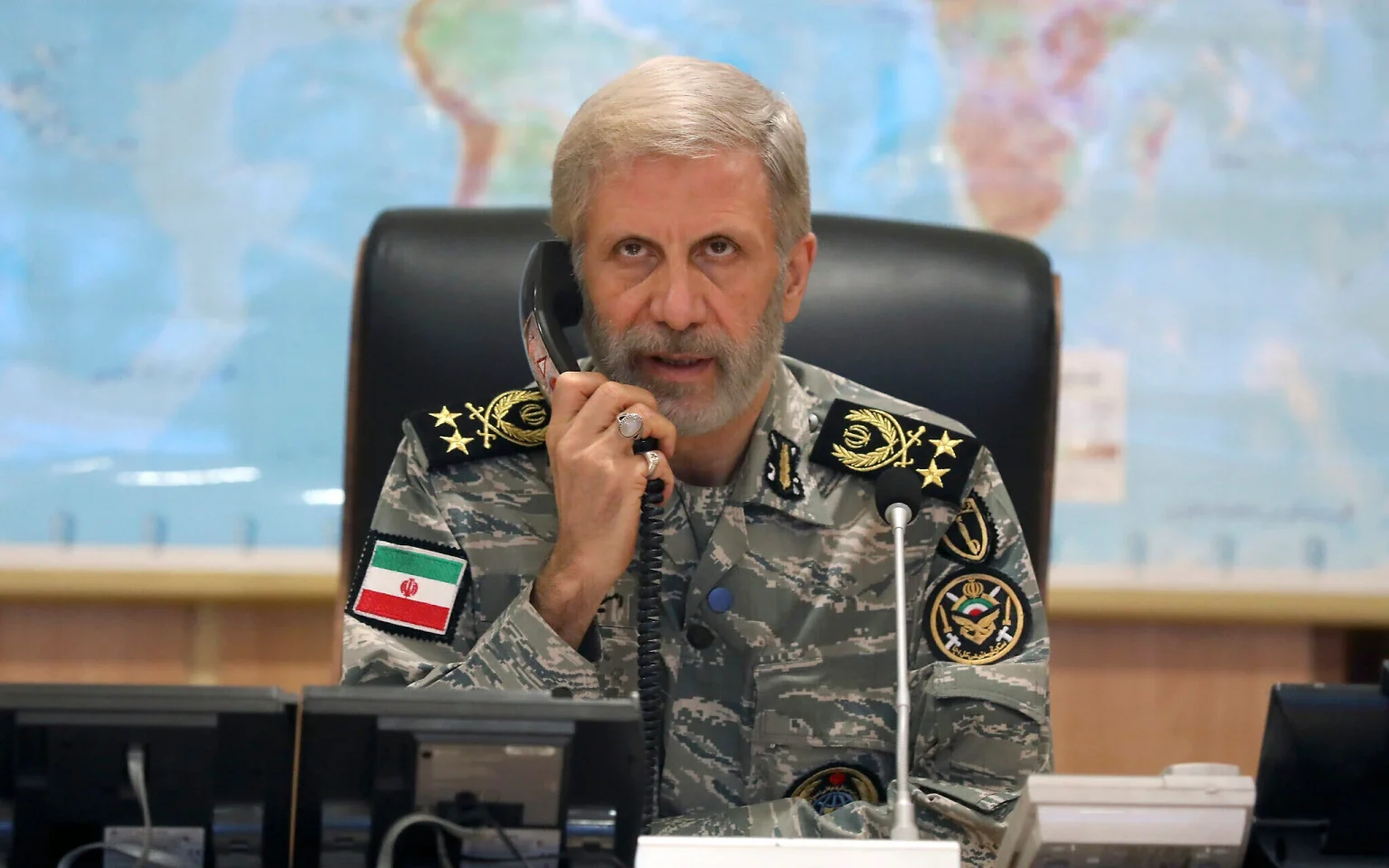

Iran’s military chief, Gen. Amir Hatami has warned that Iran will not remain passive in the face of external threats, following vocal support for anti-government protests by the United States and Israel.
“The Islamic Republic of Iran considers the escalation of hostile rhetoric against the Iranian nation a threat and will not tolerate its continuation without responding,” Hatami said, according to Iran’s Fars news agency. He added that “if the enemy makes a mistake,” Iran’s response would be “more robust” than during last June’s 12-day conflict with Israel.
The warning comes amid growing unrest sparked by economic hardship, soaring prices and the collapse of the rial. On December 28, merchants in Tehran staged protests over inflation, triggering similar demonstrations in several cities. Rights groups say several protesters were shot dead last Saturday in the Malekshahi district of Ilam province.
In recent days, Donald Trump has threatened US intervention if Iranian demonstrators are killed. “We’re watching it very closely. If they start killing people like they have in the past, I think they’re going to get hit very hard by the United States,” Trump told reporters.
Israel has also voiced support for the protests. Prime Minister Benjamin Netanyahu told his cabinet: “We stand in solidarity with the struggle of the Iranian people and with their aspirations for freedom, liberty and justice.”
At the same time, Iran’s civilian leadership signalled restraint. President Masoud Pezeshkian ordered security forces not to crack down on peaceful economic protests. In a video released after a cabinet meeting, Vice President Mohammad Jafar Ghaempanah said Pezeshkian had “ordered that no security measures be taken against the demonstrators.”
However, Ghaempanah drew a clear distinction between peaceful protesters and violent actors, stating: “Those who carry firearms, knives and machetes and who attack police stations and military sites are rioters, and we must distinguish protesters from rioters.”
Iran’s foreign ministry has accused Trump and Netanyahu of inciting violence and attempting to undermine national unity. Officials say the situation remains under close watch as demonstrations continue, though they have not yet reached the scale of past protest movements in 2009 or 2022–2023.
The tensions unfold against the backdrop of last June’s conflict, which began with Israeli strikes on Iranian military and nuclear facilities, followed by limited US attacks on three major Iranian nuclear sites — a context Iranian officials say informs the gravity of their current warnings.