

By using this site, you agree to the Privacy Policy and Terms of Use.
Accept
NewsunplugNewsunplugNewsunplug
  • Home
  • News
  • Politics
  • Metro
  • Entertainment
  • Sports
  • Lifestyle
  • Journal
Reading: WHO predicts 5.1m shortfall of nurses and midwives all over the world by 2030
Share
Notification Show More
Font ResizerAa
Font ResizerAa
NewsunplugNewsunplug
  • Home
  • News
  • Politics
  • Metro
  • Entertainment
  • Sports
  • Lifestyle
  • Journal
Search
  • Home
  • News
  • Politics
  • Metro
  • Entertainment
  • Sports
  • Lifestyle
  • Journal
Have an existing account? Sign In
Follow US
Newsunplug > Blog > News > WHO predicts 5.1m shortfall of nurses and midwives all over the world by 2030
News

WHO predicts 5.1m shortfall of nurses and midwives all over the world by 2030

Godson
Last updated: May 14, 2024 1:27 pm
Godson
Published: May 14, 2024
Share
SHARE

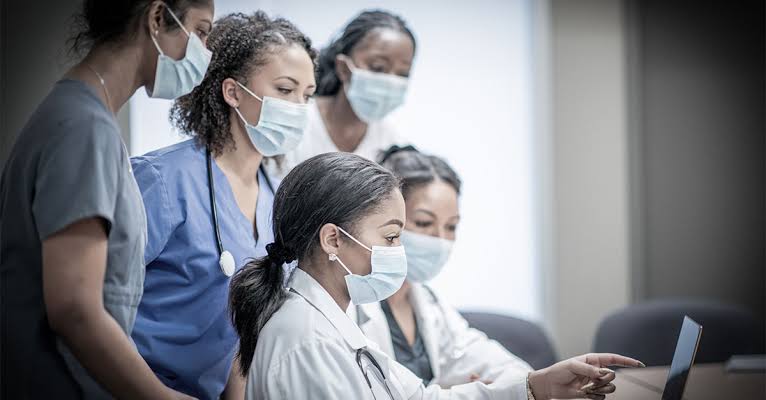
The World Health Organisation, WHO has stated that the world will face a significant shortage of nurses and midwives by the year 2030.

The WHO noted this on Internaional Nurses day, saying while there are currently an estimated 29 million nurses and 2.2 million midwives globally, a shortfall of 4.8 million nurses and and 0.31 million midwives is predicted by 2030.

The UN body said the gap is most severe in Africa, Southeast Asia, the Eastern Mediterranean region, and parts of Latin America.

According to WHO, in many countries, nurses make up half of all the health care professionals and have a vital role in how health actions are organised and applied.

The WHO says Over 80 percent of the world’s nurses work in countries with only half the global population. Additionally, a significant number of nurses (one in eight) practice in a different country than where they were born or trained.

A higher number of female nurses correlates with positive health outcomes. Studies show a positive association with health service coverage, life expectancy, and a negative correlation with infant mortality.

Investing in nurses and midwives is essential for building efficient, effective, and sustainable healthcare systems worldwide. By addressing the global nursing shortage, the world can ensure everyone has access to quality healthcare.

The positive correlation between the number of female nurses and health outcomes underscores the importance of supporting this workforce.

Studies show a link between higher levels of female nurses and improved health service coverage, life expectancy, and lower infant mortality rates.

Osun APC Expels Aregbesola’s Faction Ex-Chairman, Adeleke’s Aides, 81 Others
Gaza war: Israeli PM Netanyahu defends decision to go public about delays in supply of weapons from the United States
Minimums Wage: Labour leaders betrayed workers — Obasanjo
Gunmen abduct three daughters of Plateau Water Board MD in Jos
I Worked Against Atiku, Fayose Reveals

Quick Link

  • My Bookmark
  • Interests
  • Contact Us
  • Blog Index
Share This Article
Facebook Email Print
What do you think?
Love0
Sad0
Happy0
Sleepy0
Angry0
Dead0
Wink0

Recent Posts

  • “Churches Never Helped Us” – Izzy Ogbeide Recounts Prost!tut!0n Experience In Italy
  • Grace Makun Criticizes Trend Of Food-only Party Packs For Kids
  • “If Dna Shows My Child Is Not Mine, I’ll Still Accept Them”- Rotimi Salami
  • “I Don’t Need Inverter Anymore”- Mr Jollof Criticized For Praising Power Supply
  • Mama No Network Sparks Debate After Photos With Seyi Tinubu Go Viral

Recent Comments

No comments to show.
[Ruby_E_Template id="1714"]

Top Categories

  • Entertainment
[Ruby_E_Template id="1714"]
© 2023 Newsunplug | All Rights Reserved.
adbanner
Welcome Back!

Sign in to your account

Username or Email Address
Password

Lost your password?