

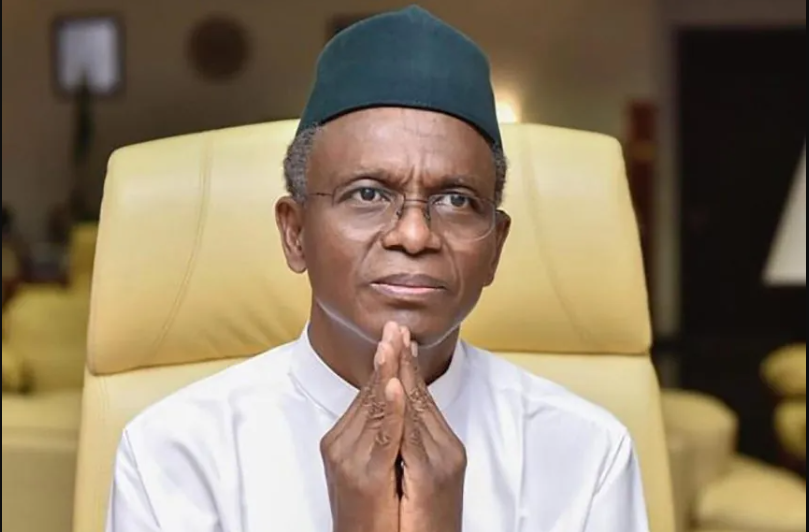

Former Kaduna state Governor Nasir El-Rufai has withdrawn his fundamental rights enforcement suit against a chief magistrate listed as the second defendant in his N1 billion case before the Federal High Court in Abuja.
The decision was communicated by his lawyer, Ugochukwu Nnakwu, who informed Justice Joyce Abdulmalik that a motion had been filed to strike out the magistrate’s name from the suit.
The withdrawal followed the judge’s earlier observation that the case failed to clearly identify the magistrate being sued. “We urge my lord to strike out the name of the second defendant as a party in this suit,” Nnakwu said.
Other parties in the matter, including representatives of the police, the Attorney-General of the Federation, and the Independent Corrupt Practices and Other Related Offences Commission, did not oppose the application.
In a brief ruling, Justice Abdulmalik struck out the magistrate’s name and also removed the related motion filed earlier. However, when El-Rufai’s counsel sought time to amend the suit, ICPC lawyer Abdul Mohammed objected, arguing that the removal of the magistrate effectively leaves no case before the court.
Responding, the judge said: “Counsel, you are jumping the gun. You can respond to this by filing a counteraffidavit.” The matter was subsequently adjourned to June 17 to allow the plaintiff amend his filings.
El-Rufai is seeking N1 billion in damages against multiple respondents, including the ICPC, the Inspector-General of Police, and the Attorney-General of the Federation, over a search conducted at his Abuja residence.
In his suit, he argued that the search violated his constitutional rights, including dignity, personal liberty, fair hearing, and privacy. He asked the court to declare the search unlawful, render any evidence obtained inadmissible, and order the return of items seized.
However, the ICPC maintained that its actions were based on a valid search warrant issued by a competent court and executed in line with due process.
The police also defended the operation, stating it acted within its statutory powers and followed all legal procedures. The case remains ongoing as both sides prepare further legal arguments.