

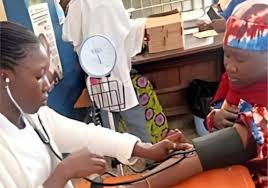

Health experts are raising serious concerns after shocking revelations showed that millions of Nigerians could be living with dangerous high blood pressure without even knowing it.
As Nigeria joined the global commemoration of World Hypertension Day on May 17, a Consultant Interventional Cardiologist at the Lagos State University Teaching Hospital, Dr. Ramon Moronkola, raised the alarm that a large number of Nigerians may be living with high blood pressure without knowing it, highlighting the growing threat of hypertension and its potentially fatal consequences.
Speaking on the matter, Moronkola noted that roughly 30 to 35 percent of Nigerians approximately one in every three adults are hypertensive.
He described the condition as a “silent killer,” explaining that most people show no symptoms until serious complications such as stroke, heart failure, kidney disease, or heart attack arise.
This year’s commemoration carries the theme: “Controlling Hypertension Together: Check Your Blood Pressure Regularly, Defeat the Silent Killer.”
The cardiologist pointed out that hypertension is one of the most widespread medical conditions in the world, affecting over 1.5 billion people globally and playing a major role in cardiovascular disease.
He explained that the condition develops when blood pressure remains consistently elevated, with a reading of 140/90 mmHg or above considered hypertensive.
He stressed that regular blood pressure checks using validated equipment and interpreted by trained professionals remain the only dependable way to detect the condition early, urging Nigerians to make it as routine as knowing their weight or height.
While acknowledging that some people may be genetically predisposed to hypertension, Moronkola emphasized that many cases can be prevented or delayed through lifestyle changes.
He advised Nigerians to eat balanced diets, cut down on salt, exercise regularly, maintain a healthy weight, quit smoking, drink alcohol in moderation, and manage stress effectively.
He also reassured that hypertension is treatable and that keeping blood pressure under control greatly lowers the risk of stroke, heart attack, kidney disease, and premature death.
However, he cautioned against self-medication and warned patients not to abandon their prescribed medications simply because they feel better or their readings appear normal, stressing that treatment is typically a lifelong commitment.
Moronkola identified stroke, heart attack, heart failure, kidney disease, eye damage, and peripheral vascular disease as key complications of uncontrolled hypertension, all of which can lead to disability or death.
He called on individuals, communities, and government authorities to work together in addressing the challenge, urging everyone to take personal responsibility for their cardiovascular health by seeking early medical care and adopting healthier habits.